

Introduction
If you’re about to register your first limited company, you’re probably juggling a dozen questions at once: how to do it correctly, what you actually need to submit, how long it takes, and whether you’ll end up paying for extras you didn’t expect. This guide is built specifically around Tide company formation for startups, with a practical, UK-first approach for people doing this for the first time.
It’s written for UK sole traders, freelancers, side-hustlers, and early-stage founders who are moving from “idea” to “proper company” and want a smoother route to incorporation. Whether you’re forming a limited company because a client asked, you want the credibility of a Ltd, or you’re simply ready to separate personal and business finances, Tide’s company formation route can be appealing because it’s designed to be quick, guided, and tied closely to opening a Tide account.
If you’re reading this as a complete beginner, you’re in the right place. We’ll cover Tide company formation for beginners in plain English, including what you’ll need before you start, what happens after your company is registered, and the common mistakes new founders make (and how to avoid them). We’ll also address the big decision question—Is Tide good for first-time company formation—by looking at who it suits, where it shines, and what you should double-check if your setup is more complex.
If you decide Tide is the right route, you can start here: https://companyformationdeals.co.uk/recommends/tide-company-formation/ and use code STARTUP200 to access the current promotion details.
Important: offers are subject to eligibility and may change. Always check the current Tide terms and conditions before applying any promo code or making deposits.
By the end, you’ll know exactly how to register a new company with tide, what information you need at your fingertips, how to stay compliant after incorporation, and how to judge if this is the best formation route for your particular kind of startup. If you want a guided path that keeps everything in one place—formation plus business banking—this article will help you make that decision confidently.
Contents
- What Tide company formation is and who it’s designed for
- What to prepare before you register a new company with tide
- Step-by-step: how Tide company formation works end-to-end
- Documents and details you’ll need as a first-time founder
- Timelines, approvals, and what happens after registration
- Costs explained: formation pricing, add-ons, and ongoing fees
- Tide company formation for startups: is it right for your first company?
- Comparison: Tide vs accountants and other formation routes
- Common mistakes new founders make (and how to avoid them)
- Offer conditions: £24.99 setup + up to £200 cashback with STARTUP200
- FAQs about the Tide offer and promo code
- General FAQs about Tide company formation
- Recap
- Conclusion
What Tide company formation is and who it’s designed for
Tide’s company formation option is a guided route to incorporating a UK limited company, typically positioned for founders who want a straightforward setup and a clear next step into business banking. For many people, the hardest part of forming a company isn’t the concept—it’s knowing what to enter, what to avoid, and what needs to happen immediately after. Tide company formation for new founders aims to reduce that uncertainty by walking you through the information you need and linking the process to opening a Tide account.
This approach often suits startups that want speed and clarity over customisation. If your business is a simple structure—one director, one shareholder, standard share allocation, and a typical service or online business—then Tide company formation for startups can feel like a sensible “all-in-one” path. You’re not trying to build an unusual corporate structure; you’re trying to get incorporated properly, then start trading with the right accounts and admin in place.
It’s also a strong fit if you’re moving from sole trader to Ltd for the first time. Many founders start as a sole trader for simplicity, then incorporate when revenue grows, risk increases, or clients prefer dealing with a limited company. In that moment, Tide company formation for beginners can be attractive because it keeps the process practical: pick a company name, confirm your registered office needs, set up directors/shareholders, and move toward an account you can actually use to run the business.
That said, it’s not for every scenario. If you need complex share classes, multiple shareholders with bespoke allocations, investor agreements, or unusual SIC code requirements, you may prefer a specialist formation agent or accountant-led incorporation. The key is understanding what you’re optimising for. If you’re optimising for a clear path and getting set up quickly, Tide’s route will likely appeal. If you’re optimising for bespoke structuring, you may want more tailored advice before you register a new company with tide.
If you’re still deciding, a useful framing is this: Tide company formation for new founders is usually best when you want a guided standard setup that gets you trading faster and helps you avoid the common admin traps that slow down first-time founders.

What to prepare before you register a new company with tide
Before you start the application, you’ll save time (and reduce the risk of errors) by preparing a few key details in advance. Most first-time founders underestimate how much friction comes from small uncertainties—like not being sure about a registered office address, or guessing how shares should be allocated. If your goal is to register a new company with tide smoothly, treat this as a short pre-flight checklist.
First, decide your company basics. You’ll want a company name that’s available and compliant, and a clear idea of what the company does so you can choose appropriate SIC codes. This is one of the areas where Tide company formation for beginners is helpful because it nudges you toward completing the required fields properly, but you still need the underlying decisions ready to go.
Second, think through ownership and control. If you’re a solo founder, it’s usually simple: you’re the director and shareholder, and you issue shares to yourself. If there are two founders, you need to agree share splits upfront. Getting this wrong can cause headaches later—especially if you want to bring in investors or allocate equity to a co-founder after the company is already live. Tide company formation for new founders works best when you’ve already agreed these basics and can enter them confidently.
Third, decide your registered office and correspondence preferences. Many early-stage founders don’t want their home address publicly displayed. Depending on the route you take, you may need an address solution (such as a registered office service). Preparing this decision in advance helps you avoid pausing mid-flow to research options while the form is open.
Finally, make sure your personal details are accurate and consistent. When you register a new company with tide, mismatched information—like a name format that doesn’t align with your ID—can slow verification steps. Have your address history and identification details to hand, and double-check spelling and dates. This is one of the fastest ways to keep the process smooth and maintain confidence that your first incorporation is done properly.
If you want to start the process once you’ve prepared the above, you can use the link here: https://companyformationdeals.co.uk/recommends/tide-company-formation/ (offer eligibility applies; terms can change).
What to prepare before you register a new company with tide
Before you start the application, you’ll save time (and reduce the risk of errors) by preparing a few key details in advance. Most first-time founders underestimate how much friction comes from small uncertainties—like not being sure about a registered office address, or guessing how shares should be allocated. If your goal is to register a new company with tide smoothly, treat this as a short pre-flight checklist.
First, decide your company basics. You’ll want a company name that’s available and compliant, and a clear idea of what the company does so you can choose appropriate SIC codes. This is one of the areas where Tide company formation for beginners is helpful because it nudges you toward completing the required fields properly, but you still need the underlying decisions ready to go.
Second, think through ownership and control. If you’re a solo founder, it’s usually simple: you’re the director and shareholder, and you issue shares to yourself. If there are two founders, you need to agree share splits upfront. Getting this wrong can cause headaches later—especially if you want to bring in investors or allocate equity to a co-founder after the company is already live. Tide company formation for new founders works best when you’ve already agreed these basics and can enter them confidently.
Third, decide your registered office and correspondence preferences. Many early-stage founders don’t want their home address publicly displayed. Depending on the route you take, you may need an address solution (such as a registered office service). Preparing this decision in advance helps you avoid pausing mid-flow to research options while the form is open.
Finally, make sure your personal details are accurate and consistent. When you register a new company with tide, mismatched information—like a name format that doesn’t align with your ID—can slow verification steps. Have your address history and identification details to hand, and double-check spelling and dates. This is one of the fastest ways to keep the process smooth and maintain confidence that your first incorporation is done properly.
If you want to start the process once you’ve prepared the above, you can use the link here: https://companyformationdeals.co.uk/recommends/tide-company-formation/ (offer eligibility applies; terms can change).

Step-by-step: how Tide company formation works end-to-end
For many founders, the biggest appeal of Tide company formation for startups is that the process is structured, guided, and designed to prevent common first-timer errors. Rather than sending you away to Companies House with little context, Tide walks you through the key decisions in a logical order, making it particularly suitable for Tide company formation for beginners.
The process typically starts with selecting company details. You’ll enter your proposed company name, confirm its availability, and describe your business activity using SIC codes. At this stage, new founders often worry about “getting it wrong,” but Tide company formation for new founders simplifies this by offering prompts and explanations that help you choose accurately without overcomplicating things.
Next comes director and shareholder setup. If you’re a solo founder, this step is straightforward—you’ll list yourself as director and shareholder and confirm the number of shares issued. If there’s more than one founder, you’ll define ownership percentages here. This is one of the most important steps when you register a new company with tide, because changing share structures later can be time-consuming and costly. Tide’s flow encourages you to slow down and confirm these details before submission.
You’ll then review registered office options. Depending on your preferences, this could be your home address or an alternative solution. For first-time founders, privacy is often a concern, so this is a key decision point. Tide company formation for startups doesn’t assume you already know the implications—it explains what the address is used for and why it matters.
Once these details are confirmed, the formation request is submitted to Companies House. At the same time, you’ll progress toward opening your Tide account, which is where the integration really matters. Instead of treating banking as a separate chore, Tide aligns account setup with company formation, helping you get operational faster once incorporation is complete.
After approval, you receive confirmation documents and can begin trading. For many users asking Is Tide good for first-time company formation, this end-to-end clarity is the biggest benefit: fewer unknowns, fewer admin gaps, and a clear next step once the company exists.
Documents and details you’ll need as a first-time founder
One of the reasons Tide company formation for beginners works well is that the documentation requirements are relatively light compared to traditional accountant-led routes. That said, being prepared makes a noticeable difference to how smoothly the process runs.
At a minimum, you’ll need accurate personal details for all directors and shareholders. This includes full legal names, dates of birth, residential addresses, and nationality. When you register a new company with tide, consistency matters—details must align with your identification documents to avoid verification delays.
You’ll also need to confirm your registered office address. This address becomes publicly visible on the Companies House register, which is why many first-time founders pause at this step. Tide company formation for new founders highlights this clearly so you’re not caught off guard later. Deciding this upfront avoids last-minute scrambling that can stall your application.
Identification checks are another key part of the process. Directors are usually required to verify their identity, often digitally. This is standard across UK company formation services, but it’s particularly relevant for Tide company formation for startups because banking regulations apply alongside incorporation rules. Having valid ID ready helps keep everything moving.
Beyond personal documentation, you’ll need clarity on your company’s structure. That means knowing how many shares will be issued, who owns them, and whether anyone has significant control. Even if you’re a solo founder, these declarations are mandatory. Tide company formation for beginners makes these requirements visible, but it’s still your responsibility to provide accurate information.
Finally, you should be prepared to confirm your business activity and intentions. While this isn’t about writing a business plan, you should be able to describe what the company will do. This supports both company formation and account approval, reinforcing why Tide company formation for startups works best when founders have a clear, lawful business model from day one.
Timelines, approvals, and what happens after registration
Speed is often a deciding factor for founders choosing Tide company formation for startups, especially if they need a company number quickly to invoice clients or secure contracts. In most straightforward cases, Companies House approval can be relatively fast, but timelines still depend on accuracy and verification.
Once your details are submitted, the formation request is reviewed. If everything is correct, approval can arrive quickly, but errors or missing information can cause delays. This is why Tide company formation for beginners places emphasis on reviewing entries before submission. Small mistakes—like incorrect dates or mismatched addresses—are the most common causes of slowdowns.
After incorporation, you’ll receive your company number and official documents. At this point, your limited company legally exists, but there’s still follow-up admin to consider. Tide company formation for new founders helps bridge this gap by linking formation with business banking, so you’re not left wondering what to do next.
Post-registration, you’ll need to handle statutory obligations. This includes maintaining company records, understanding confirmation statement deadlines, and preparing for Corporation Tax registration with HMRC. While Tide company formation for startups doesn’t replace professional tax advice, it does make founders aware of these responsibilities early, which reduces the risk of accidental non-compliance.
You’ll also need to think about trading readiness. That means ensuring your Tide account is active, setting up invoicing, and separating personal and business finances. For many people evaluating Is Tide good for first-time company formation, this “what happens next” phase is where Tide’s integrated approach stands out—formation doesn’t end in isolation; it leads directly into running the business.
Costs explained: formation pricing, add-ons, and ongoing fees
Understanding the full cost picture is essential before choosing any formation route, especially for first-time founders who are budgeting carefully. Tide company formation for startups is typically positioned as a low-friction entry point, but it’s still important to distinguish between one-off formation costs, optional extras, and ongoing account-related fees.
The core formation fee covers registering your limited company with Companies House through Tide’s platform. This includes submitting the required details, handling the incorporation filing, and issuing the standard post-incorporation documents. For many founders, this baseline cost feels reasonable because it removes the need to navigate Companies House forms independently. Tide company formation for beginners benefits here because the price reflects guidance as well as the filing itself.
Optional add-ons can affect the total cost. Depending on your setup, you may choose services such as a registered office address or correspondence handling. These aren’t mandatory for everyone, but they’re commonly used by founders who don’t want their home address listed publicly. When assessing Tide company formation for new founders, it’s worth deciding in advance whether privacy or convenience add-ons matter to you, as this avoids surprise costs mid-application.
Ongoing costs are primarily linked to your Tide account rather than the act of formation itself. While company formation is a one-time event, running a limited company requires a business account to manage income, expenses, and tax obligations. Tide company formation for startups often appeals because it naturally leads into an operational account, reducing the gap between incorporation and trading.
The key takeaway on costs is transparency. If you review pricing carefully and only select add-ons that genuinely support your situation, Tide company formation for beginners can be a controlled, predictable expense rather than an open-ended one. This clarity is especially valuable if you’re forming a company for the first time and want to avoid creeping fees.
Tide company formation for startups: is it right for your first company?
This is the question most new founders eventually ask, often phrased as Is Tide good for first-time company formation. The answer depends less on Tide itself and more on your expectations, experience level, and company complexity.
For straightforward setups, Tide company formation for startups aligns well with first-time needs. If you’re launching a simple limited company—one or two directors, standard share structure, and a clear business activity—the process feels logical and accessible. Tide company formation for beginners supports this by explaining each step as you go, rather than assuming prior knowledge.
Another strength is momentum. Many founders stall after incorporation because they don’t know what to do next. With Tide company formation for new founders, formation flows directly into banking, which helps you move from “registered” to “operational” faster. This is particularly useful if you need to invoice clients or pay suppliers soon after incorporation.
However, it’s important to be realistic. If your company requires complex equity arrangements, bespoke shareholder agreements, or industry-specific compliance, Tide company formation for startups may feel limited. In those cases, an accountant-led setup could provide deeper customisation, albeit at a higher cost and with more back-and-forth.
For most people asking Is Tide good for first-time company formation, the deciding factor is simplicity versus control. If you value guidance, speed, and a joined-up experience, Tide is often a strong fit. If you already know exactly how you want your company structured and want bespoke advice at every stage, you may prefer a more traditional route.
Comparison: Tide vs accountants and other formation routes
Choosing how to incorporate isn’t just about Tide versus Companies House—it’s about deciding how much guidance and integration you want. Tide company formation for startups sits between fully DIY incorporation and fully bespoke accountant-led setups.
Compared to registering directly with Companies House, Tide company formation for beginners offers structure. DIY incorporation is cheaper on paper, but it assumes you’re confident with forms, terminology, and follow-up obligations. Many first-time founders underestimate the mental load of doing it alone. Tide company formation for new founders reduces that burden by prompting decisions and explaining implications as you go.
Against traditional accountants, Tide’s route is usually faster and more predictable. Accountants are valuable for complex scenarios, but they can introduce delays, additional consultations, and higher upfront costs. For a simple startup, Tide company formation for startups can achieve the same legal outcome with less friction.
Other online formation agents may offer similar services, but Tide’s differentiator is integration. Formation and banking are aligned, which reduces duplication and speeds up readiness to trade. This is often cited by founders evaluating Is Tide good for first-time company formation, as it simplifies the transition from paperwork to real-world operations.
Ultimately, the best route depends on how much hand-holding you need versus how much customisation you require. Tide company formation for beginners tends to win on clarity and speed, while accountants win on complexity and bespoke structuring.
Common mistakes new founders make (and how to avoid them)
First-time incorporation is full of small traps that can create big problems later. Tide company formation for startups helps reduce these risks, but awareness still matters.
One common mistake is rushing share decisions. Founders often split shares informally without thinking ahead. When you register a new company with tide, you’re creating a legal structure that’s harder to change later. Taking time to agree ownership upfront avoids future disputes.
Another issue is misunderstanding registered office implications. Many beginners don’t realise this address becomes public. Tide company formation for beginners flags this clearly, but it’s still your responsibility to choose wisely if privacy matters.
Underestimating post-formation obligations is another trap. Some founders think incorporation is the finish line. In reality, it’s the starting point. Tide company formation for new founders helps highlight next steps, but you still need to stay on top of confirmations, taxes, and record-keeping.
Finally, some founders assume formation replaces professional advice entirely. While Tide company formation for startups simplifies the process, it doesn’t replace tailored tax or legal advice if your situation is unusual. Knowing when to seek extra help is part of being a responsible director.
Avoiding these mistakes doesn’t require expertise—just awareness and a willingness to slow down at key decision points.
Offer: £24.99 setup + up to £200 cashback with STARTUP200
For many first-time founders, the promotional offer attached to Tide company formation for startups can materially reduce the cost of getting incorporated and operational. At the time of writing, the headline promotion combines discounted company formation with cashback incentives, but eligibility and timing matter.
What the offer includes
- Company formation for £24.99 when you apply through the promotional route
- Up to £200 in cashback, split across card spend and savings activity
How the offer works in practice
To access the promotion, you must use the code STARTUP200 when you register your business and open your Tide account. The code needs to be applied during the sign-up process; it cannot usually be added retrospectively.
The cashback element is conditional. First, you must spend £100 on your Tide card within 30 days of opening your account to unlock a £75 cashback reward. This spend typically covers everyday business expenses such as software subscriptions, equipment, or travel, making it achievable for many startups once they begin trading.
In addition, there is a savings-based incentive. If you deposit at least £5,000 into a Tide Instant Saver Account within 7 days of opening your account and keep that balance there for one month, you may qualify for an additional £125 cashback. This element is more suitable for founders who already have startup capital or retained earnings available.
Time limits and eligibility considerations
Both cashback components are time-bound, meaning delays in spending or deposits can invalidate eligibility. Tide company formation for new founders works best when you plan these steps in advance so you don’t miss deadlines.
It’s also important to remember that cashback offers are subject to account approval and ongoing compliance checks. Not every applicant will qualify, and Tide reserves the right to change or withdraw promotions.
Disclaimer: subject to change—check current T&Cs before applying.
If you want to check the current offer details and eligibility, start here: https://companyformationdeals.co.uk/recommends/tide-company-formation/ using code STARTUP200.

FAQs about the Tide offer and promo code
Can I use the STARTUP200 code with Tide company formation for startups?
Yes, the code STARTUP200 is designed to be used when applying for Tide company formation for startups, subject to eligibility and current terms.
Does the £24.99 price include Companies House fees?
The £24.99 formation price covers the promotional formation route, but you should always confirm inclusions at checkout as terms may change.
How do I unlock the £75 cashback?
You must spend £100 on your Tide card within 30 days of opening your account after using the promo code.
Is the £125 Instant Saver cashback guaranteed?
No, it depends on depositing at least £5,000 within 7 days and maintaining that balance for one month.
Can beginners qualify for the full £200 cashback?
Yes, Tide company formation for beginners can qualify if all spending and deposit conditions are met.
What happens if I miss the spending deadline?
Missing the deadline usually means forfeiting that part of the cashback offer.
Is the offer available to existing Tide customers?
The promotion is generally aimed at new customers using Tide company formation for new founders.
Can I apply the promo code after registration?
Promo codes usually need to be applied during sign-up and cannot be added later.
Does the cashback affect my taxes?
Cashback may be treated as income; seek professional advice if unsure.
Can the offer be withdrawn?
Yes, promotions are subject to change or withdrawal at any time.
General FAQs about Tide company formation
Is Tide company formation for startups suitable for solo founders?
Yes, it is commonly used by solo founders forming their first limited company.
Is Tide good for first-time company formation?
For straightforward setups, many founders find it suitable due to its guided process and integrated banking.
Can I register a new company with tide if I’m switching from sole trader?
Yes, many founders use Tide when moving from sole trader to limited company status.
Does Tide company formation for beginners include tax advice?
No, it simplifies formation but does not replace personalised tax or legal advice.
How long does Tide company formation usually take?
Timelines vary, but straightforward applications can be processed relatively quickly once submitted.
Do I have to open a Tide account to use the formation service?
Yes, the formation process is linked to opening a Tide business account.
Can I change company details after incorporation?
Yes, but changes can involve additional admin and potential costs.
Is Tide company formation for new founders fully online?
Yes, the process is designed to be completed digitally.
Can I use Tide company formation for startups with multiple directors?
Yes, provided the structure is straightforward and details are agreed upfront.
Will my home address be public?
If used as the registered office, yes; alternative options should be considered if privacy is important.
Recap
For UK founders registering their first limited company, choosing the right formation route can shape how smoothly the business gets off the ground. Tide company formation for startups is designed to remove friction from that early stage by combining guided incorporation with a clear path into business banking. For many people navigating company formation for the first time, this joined-up approach reduces uncertainty and keeps momentum high.
Throughout this guide, we’ve looked at Tide company formation for beginners from multiple angles: preparation, process, timelines, costs, and common mistakes. The recurring theme is simplicity. If your business structure is straightforward and you value clarity over custom complexity, Tide company formation for new founders offers a predictable and accessible way to incorporate without needing deep prior knowledge.
We’ve also addressed the decision point many founders face—Is Tide good for first-time company formation—and the answer consistently depends on expectations. For solo founders, freelancers, and small startup teams who want to register a company correctly and move quickly into trading, Tide’s model fits well. It helps founders register a new company with tide while keeping post-formation steps visible, rather than leaving you to work them out alone.
Cost transparency, integrated banking, and clear guidance make this route particularly appealing for founders who want to stay focused on building the business rather than wrestling with admin. When combined with the current promotional incentives, the overall value proposition becomes stronger for eligible applicants.
If you’re a UK-based founder looking for a practical, beginner-friendly route to incorporation, Tide’s company formation service remains one of the most accessible options available.
Conclusion
If you’re preparing to form your first limited company, Tide company formation for startups offers a structured, guided route that aligns well with the realities of early-stage business building. Rather than treating incorporation as a standalone task, Tide connects company registration with business banking, helping founders move from idea to operation with fewer gaps and fewer unknowns.
For many UK founders, especially those without prior experience, this approach reduces the risk of common mistakes and removes the intimidation factor often associated with Companies House filings. Tide company formation for beginners works best when the business structure is simple and decisions are made clearly upfront. In those scenarios, it provides a reliable way to incorporate and start trading without unnecessary delays.
The key question—Is Tide good for first-time company formation—comes down to priorities. If you value speed, clarity, and a guided experience over bespoke structuring, Tide is a strong contender. If your setup is more complex, additional professional advice may still be appropriate, but for the majority of new founders, Tide strikes a practical balance between control and simplicity.
If you’re ready to take the next step, you can start the process using the link below. Apply using the promo code STARTUP200 to access the current offer, including discounted formation and potential cashback (subject to eligibility and terms).
👉 Start here: https://companyformationdeals.co.uk/recommends/tide-company-formation/
Promo code: STARTUP200
Disclaimer: offers and eligibility criteria are subject to change—always check the latest Tide T&Cs before applying.

* Tide offer terms and conditions: Use the code STARTUP200 when you register your business and open your Tide account. Spend £100 on your Tide card within 30 days to unlock your £75 cashback reward. In addition, if you deposit at least £5,000 into your Tide Instant Saver Account within 7 days of opening (and keep it there for one month), you’ll qualify for the additional £125 Tide Instant Saver offer.
- Companies House Price Increase 2026: What UK Startups Need to Know
 Introduction If you’re planning to register a limited company this year, the companies house price increase is something you’ll want to factor into your setup budget straight away. Even small fee changes can affect first-time founders, freelancers switching from sole trader to limited company, and growing SMEs looking to incorporate a new business or spin… Read more: Companies House Price Increase 2026: What UK Startups Need to Know
 - Compare Company Formation agents
 Introduction Choosing the right way to register your limited company can feel deceptively simple—until you’re staring at dozens of “done-for-you” options with different pricing, add-ons, turnaround times, and upsells. If you’re trying to compare company formation agents, this guide is written to make that decision faster, safer, and more cost-effective for UK founders in 2026.… Read more: Compare Company Formation agents
 - Best Priced Formation Services in the UK
 Introduction Choosing the right company formation provider is one of the first—and most important—decisions you’ll make when starting a business. With dozens of providers claiming to be the cheapest or fastest, it can be difficult to identify which platforms truly offer the best priced formation services without hidden fees, unnecessary upsells, or outdated processes. This… Read more: Best Priced Formation Services in the UK
 - Best Company Formation Services in the UK
 Introduction Finding the best company formation service in the UK has become more complex—but also more important—than ever before. In 2026, founders are no longer choosing between simply registering a company or not; they are choosing how they register, who supports them, and what tools they start their business with from day one. This guide… Read more: Best Company Formation Services in the UK
 - Benefits of Company Formation for Small Businesses
 Introduction Understanding the benefits of company formation is essential for any small business owner who wants to operate professionally, protect their income, and build a business that can grow sustainably in the UK. Whether you are a sole trader, freelancer, startup founder, or SME owner, the decision to form a company is not just an… Read more: Benefits of Company Formation for Small Businesses
 - How to Form a Company in the UK: Step-by-Step
 Introduction If you’re planning to start a business in the UK, understanding how to register a limited company correctly is one of the most important first decisions you’ll make. While the UK is known for having a straightforward incorporation system, many founders still run into delays, rejections, or compliance issues simply because they don’t fully… Read more: How to Form a Company in the UK: Step-by-Step
 - Company Formation Explained for UK Beginners
 Introduction Company formation explained in simple, practical terms is something many UK founders actively search for—but rarely find done properly. If you are a sole trader, freelancer, startup founder, or small business owner thinking about taking the next step, this guide is written specifically for you. The UK company formation process can look intimidating at… Read more: Company Formation Explained for UK Beginners
 - Tide Company Formation Promo Code – STARTUP200
 Introduction If you’re launching a UK limited company and want to keep setup costs low, the Tide company formation promo code can be a simple way to reduce friction, register faster, and potentially unlock cashback once your account is live. This guide is written for UK sole traders moving to limited status, freelancers incorporating for… Read more: Tide Company Formation Promo Code – STARTUP200
 - Tide Company Formation for First-Time Founders
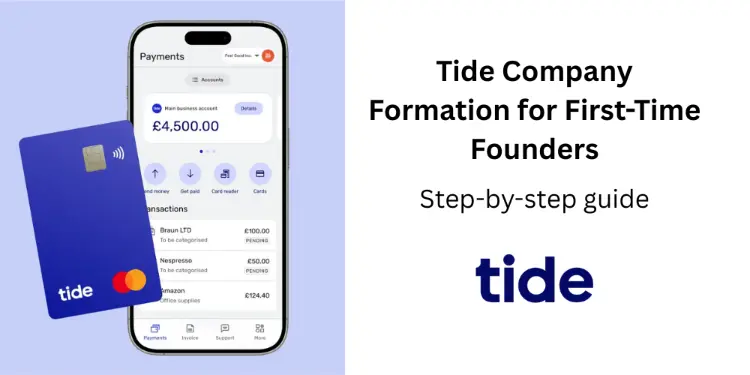 Introduction If you’re about to register your first limited company, you’re probably juggling a dozen questions at once: how to do it correctly, what you actually need to submit, how long it takes, and whether you’ll end up paying for extras you didn’t expect. This guide is built specifically around Tide company formation for startups,… Read more: Tide Company Formation for First-Time Founders