

Introduction
If you’re building a business in the UK and you’re ready to go from idea to “official”, you’ll see a lot of options for setting up a limited company. This guide is for founders who want clarity, speed, and fewer admin headaches—without losing sight of what matters legally and financially. In this article, tide company formation explained means breaking down what Tide’s formation route actually does, what it doesn’t do, and how to decide if it’s the right move for your startup.
This is written for UK sole traders thinking about going limited, early-stage startups, freelancers, contractors, and small business owners who want an educational walk-through rather than a sales pitch. Many people get stuck on the same problem: they know they need to register properly with Companies House, but they don’t know what the steps are, what details they’ll be asked for, or how company formation links to business banking and day-to-day operations. That uncertainty causes delays—and delays often mean missed opportunities, messy finances, and avoidable stress.
Tide positions its company formation option as a streamlined route to incorporate a UK limited company while also setting you up to run the business afterwards. The practical appeal is simple: one place to handle the core setup steps, plus a business account pathway that’s designed for founders who need to get moving quickly. But “simple” does not mean “one-size-fits-all”. Whether you’re forming a company for the first time or switching from sole trader to limited company, it’s still vital to understand director responsibilities, what information becomes public at Companies House, how share structure works in plain English, and what “registered office” really means for post and privacy.
If you want to use the current Tide promotion, you can start here: https://companyformationdeals.co.uk/recommends/tide-company-formation/ and apply code STARTUP200 when you register and open your Tide account. The offer includes registering your business for £24.99 and a chance to get up to £200 cashback, subject to eligibility; offers may change.
Over the next sections, you’ll get a tide company formation guide that covers the essentials: what is tide company formation, how does tide company formation work in practice, and is tide good for company formation in the uk when you compare it with alternatives like traditional formation agents and DIY Companies House filing. You’ll also get a clear, step-by-step breakdown, a realistic view of costs and timelines, and an easy checklist of what to prepare before you begin—so you can make a confident decision and keep your setup clean from day one.
Contents
- What is Tide company formation?
- How does Tide company formation work?
- Why UK startups use company formation services
- Tide company formation step-by-step guide
- Documents and details you need before you start
- Costs, timelines, and what £24.99 usually covers
- Common mistakes and how to avoid them
- Is Tide good for company formation in the UK?
- Tide vs alternatives: formation agent vs DIY
- What happens after incorporation: banking, tax, and admin
- Promotion: Register for £24.99 + Get up to £200 cashback
- FAQs about the offer and promo code
- General FAQs about Tide company formation
- Recap
- Conclusion
What is Tide and how company formation fits
Tide started as a digital-first business banking provider aimed at UK sole traders and small companies that wanted an alternative to traditional banks. Its platform focuses on simplicity, speed, and app-based money management, making it popular with modern businesses that prefer online solutions.
Over time, Tide recognised that many new customers faced the same challenge before opening an account: company formation. Registering a company with Companies House can be confusing for first-time founders, and delays at this stage often slow down access to banking. In response, Tide introduced its own company formation service, allowing founders to complete tide company registration as part of the same journey.
Tide does not replace Companies House or change the legal process of incorporation. Instead, it acts as an intermediary, collecting your information and submitting it digitally on your behalf. This includes details such as company name, registered office address, business activities, and director and shareholder information. By structuring the process clearly, Tide aims to reduce common errors that can lead to rejected applications.
Where Tide company formation fits particularly well is in its integration with banking. Once your company is registered, much of the information required to open a business account is already in place. This means you do not need to re-submit documents or wait for separate approvals from another provider. For many founders, this integration is one of the biggest advantages of using Tide.
Tide business formation is designed for standard UK limited companies rather than complex or bespoke structures. It prioritises efficiency and accessibility over customisation. For businesses with straightforward needs, this approach can significantly reduce the time and effort involved in getting started.
In short, Tide’s company formation service fits neatly into its wider ecosystem. It is aimed at founders who want a single platform to handle incorporation and banking, helping them move from idea to trading business with minimal friction.

What is Tide company formation?
What is tide company formation in simple terms? It’s a service pathway that helps you incorporate a UK limited company and get the basics in place so you can start operating as a registered business. For many founders, the confusing part isn’t whether they should register—it’s understanding what “formation” actually includes. Company formation is the legal creation of your company at Companies House, which results in a registered company number and a public record of key details like your registered office address, directors, and (where applicable) people with significant control. Tide’s formation option is designed to guide you through those required inputs in a more founder-friendly way than doing it entirely alone.
It helps to separate three ideas that often get mixed up. First is incorporation: submitting the company details to Companies House and getting confirmation that the company exists. Second is company setup: decisions you make at the start, like your company name, share structure, SIC codes (your business activity codes), and whether you’ll use a registered office address service. Third is ongoing operations: banking, payments, bookkeeping habits, and admin rhythms that keep your company compliant after it’s created. The educational value of a tide company formation guide is that it connects these three steps, so you don’t treat incorporation as a finish line when it’s actually the start of how you run the business.
If you’re a UK sole trader thinking about going limited, what is tide company formation likely to mean for you? It’s a clean “switch point” where your business becomes a separate legal entity. That can make it easier to keep finances organised and may influence how you present your business to clients, suppliers, and lenders. For startups, it can also formalise founder ownership by making shares and director roles explicit from the beginning, which is useful if you’re planning to bring in co-founders, early hires, or future investment.
To keep expectations realistic, company formation is not a magic compliance wand. You still need to understand director responsibilities, keep records, and make key decisions thoughtfully. A good tide company formation guide should also remind you that the “best” option depends on your situation: a simple one-director company is different from a startup with multiple founders, different share classes, or complex IP arrangements. That’s why the next section focuses on the practical question founders ask most often: how does tide company formation work end-to-end?
How does Tide company formation work?
How does tide company formation work in practice? Think of it as a structured journey that collects the information Companies House requires, submits it in the correct format, and then helps you move into the “running the company” phase once incorporation is approved. The key benefit for founders is reducing uncertainty: you’re prompted for the right details in the right order, with less chance of missing something basic like share allocation, director information, or your company’s registered address.
At a high level, how does tide company formation work usually looks like this. You start by choosing the company name and confirming it meets naming rules. Next, you provide the core company details: the registered office address (where official post is sent), director details (and additional directors if applicable), and the people with significant control information where required. You’ll also choose SIC codes that describe what your company does—this matters more than people think because it influences how your business is categorised and can affect how others understand your company on the public register.
Then comes the part that founders often rush: shares and ownership. A straightforward company might issue a simple number of ordinary shares to one director/shareholder. A two-founder setup often involves splitting shares between founders, and you’ll want to be consistent with any informal agreements you’ve already made. Educationally, this is where a tide company formation guide should encourage you to slow down: changing share structure later is possible, but it can create extra admin and cost, especially if you’re already trading.
Once your information is submitted, Companies House processes the application. When it’s approved, your company becomes active, and you receive the incorporation confirmation and company number. That’s the legal “birth” of the company. After that, the operational steps matter: setting up how you’ll handle invoices, expenses, and basic record-keeping from day one. This is also the moment you should decide how you’ll manage ongoing compliance tasks like confirmations, filing deadlines, and tax registration steps that may apply depending on your circumstances.
Finally, founders ask: is tide good for company formation in the uk if you want speed and simplicity? For many early-stage businesses, the appeal is that formation is connected to an operational account setup journey, which can reduce context-switching across multiple providers. But suitability depends on your needs—especially if you have complex founder arrangements or want bespoke legal advice. The later comparison section will cover when Tide can be a fit, when a specialist agent may be better, and when DIY Companies House filing makes more sense.

Why UK startups use company formation services
For many founders, the biggest challenge at the start isn’t the idea—it’s turning that idea into a properly registered business without getting lost in admin. This is why UK startups often choose to use a company formation service rather than filing directly with Companies House. A formation service doesn’t change the legal requirements, but it can make the process easier to understand and harder to get wrong.
One reason startups lean toward guided formation is confidence. New founders frequently ask what is tide company formation actually doing that they couldn’t do themselves. The answer is structure. Instead of navigating multiple government pages and legal terms, a service walks you through the required inputs in a logical order. That reduces the risk of errors like choosing unsuitable SIC codes, misunderstanding share allocation, or entering inconsistent director details. These mistakes aren’t always obvious at the time, but they can cause friction later when opening accounts, working with accountants, or applying for funding.
Speed is another factor. While Companies House incorporation itself can be quick, preparation often isn’t. A tide company formation guide focuses attention on the decisions you must make upfront, which can save days of back-and-forth. For startups under time pressure—perhaps lining up a first client or contract—that clarity matters. Knowing how does tide company formation work also helps founders plan realistically, rather than assuming incorporation alone means the business is “ready”.
There’s also the issue of mental load. Early-stage founders are juggling product, marketing, finances, and personal risk. Formation services reduce context switching by bundling related steps together. Even for founders who could technically file themselves, having a structured process can free up attention for more valuable work. This doesn’t mean services are always better, but it explains why they’re popular among first-time founders and small teams.
Finally, perception plays a role. Many clients, suppliers, and partners feel more comfortable dealing with a registered limited company that has its details clearly set out. Using a formation service can help ensure that public-facing information—company name, address, and structure—looks consistent and professional from day one. When founders later ask is tide good for company formation in the uk, this context is important: the value isn’t just incorporation, but reducing uncertainty at a critical stage.
Tide company formation step-by-step guide
This section acts as a practical tide company formation guide, showing how the process typically unfolds from start to finish. Understanding each step before you begin helps you move faster and avoid last-minute confusion.
Step one is preparation. Before you start, decide on your company name, check that it’s available, and think about how you want ownership to work. Even a simple one-person company benefits from clarity here. Knowing what is tide company formation at this stage means recognising that the service will ask for precise details, not just broad intentions.
Step two is entering company information. You’ll provide the registered office address, director details, and business activity information using SIC codes. Accuracy matters, because these details become part of the public Companies House record. If you’re unsure which SIC code best fits, take time to read the descriptions rather than guessing.
Step three is ownership and shares. This is where many founders rush, but it’s one of the most important parts. You’ll decide how many shares to issue and who owns them. A tide company formation guide encourages founders to align this with any informal agreements between co-founders. Changing this later is possible, but it adds complexity.
Step four is submission and approval. Once everything is reviewed, the application is sent to Companies House. Approval times can vary, but many companies are incorporated quickly. During this period, it helps to understand how does tide company formation work behind the scenes: the service submits the same legal data you would submit yourself, just in a more guided format.
Step five is post-incorporation setup. Once approved, your company exists legally, but you still need to think about operations. This includes how you’ll manage payments, record expenses, and stay on top of deadlines. Formation is the foundation, not the finish line. For many startups, this step is where the real value of a guided process shows, because it naturally leads into day-to-day business administration.
Documents and details you need before you start
One of the easiest ways to delay incorporation is starting without the right information to hand. Knowing in advance what details are required makes tide company formation explained in practice rather than theory. While the process itself is guided, you’re still responsible for providing accurate information.
You’ll need personal details for each director, including full legal name, date of birth, nationality, and a service address. These details are mandatory for Companies House and must match official records. If you’re forming the company with others, make sure everyone agrees on what information will be used before you begin.
You’ll also need a registered office address. This is the official address for government correspondence and appears on the public register. Understanding what is tide company formation includes recognising the difference between a registered office and a trading address. Some founders use their home address, while others prefer a separate address for privacy reasons.
Another key requirement is your company’s share structure. Even if you’re the only founder, you must decide how many shares to issue and their nominal value. This ties directly into ownership and control. A tide company formation guide should prompt you to think this through calmly, rather than clicking through quickly.
Finally, be prepared with a general description of your business activities. Choosing appropriate SIC codes helps ensure your company is categorised correctly. This may seem minor, but it affects how your company is viewed by banks, partners, and sometimes lenders. By preparing these details in advance, you make the entire process smoother and reduce the risk of errors that could need correction later. This preparation also makes it easier to evaluate is tide good for company formation in the uk for your specific situation.
Costs, timelines, and what £24.99 usually covers
When founders look into incorporation, cost is often one of the first questions. Understanding pricing properly is a core part of tide company formation explained, because it helps you compare options fairly rather than assuming all services are the same. The advertised £24.99 price point typically refers to the company registration fee itself, positioned as a low-cost way to get your limited company officially registered in the UK.
In practice, this price usually covers the submission of your company details to Companies House and the basic incorporation process. It’s important to understand that Companies House itself charges a fee for incorporation, whether you file directly or use a service. What a formation service adds is guidance and structure. A tide company formation guide frames the £24.99 as the entry point for incorporation rather than the total lifetime cost of running a company.
Timelines are another key consideration. Companies House incorporation can be fast, sometimes completed within a day or two, but this depends on demand and accuracy of the submission. Errors or inconsistencies can slow things down. One benefit of understanding how does tide company formation work is knowing that the guided process aims to reduce mistakes that cause delays. However, no service can guarantee instant approval, so founders should plan with a small buffer.
It’s also important to be realistic about additional costs that may arise after incorporation. These might include accounting support, software subscriptions, or optional services you choose later. What is tide company formation does not include is ongoing legal or tax advice; those are separate considerations. Evaluating is tide good for company formation in the uk means looking at the overall value of the setup journey, not just the headline price.
Common mistakes and how to avoid them
Even with a guided process, founders can still make avoidable mistakes during incorporation. One of the most common is rushing decisions. Tide company formation explained clearly means recognising that formation choices have long-term implications. Share allocation, director appointments, and company name decisions shouldn’t be made on impulse.
Another frequent issue is misunderstanding addresses. Some founders assume the registered office is purely internal, but it appears on the public register. Knowing what is tide company formation includes understanding visibility and privacy implications, especially if you’re working from home.
Choosing inappropriate SIC codes is another subtle mistake. While it might seem minor, it can affect how your business is categorised and perceived. A tide company formation guide encourages founders to read descriptions carefully rather than selecting the first code that seems close.
Finally, some founders assume incorporation completes all compliance. It doesn’t. Understanding how does tide company formation work also means recognising that confirmation statements, tax registration, and record-keeping follow incorporation. Avoiding these mistakes makes it easier to decide is tide good for company formation in the uk for your needs, because you’re judging the service with realistic expectations.
Is Tide good for company formation in the UK?
This question comes up repeatedly, and answering it properly requires context rather than hype. Is tide good for company formation in the uk depends on what you value most at the start of your business. For founders who want a straightforward, guided route to incorporation with a clear next step into operations, it can be a good fit.
From an educational perspective, tide company formation explained shows that the service focuses on simplicity and accessibility. It’s well-suited to single-director companies, freelancers going limited, and small startup teams with uncomplicated ownership structures. The guided flow can reduce anxiety for first-time founders who aren’t familiar with Companies House requirements.
However, it’s not necessarily ideal for every situation. Companies with complex share structures, external investors at formation, or bespoke legal arrangements may need specialist advice beyond a standard formation service. A tide company formation guide should always encourage founders to match the tool to the complexity of their situation.
In short, is tide good for company formation in the uk is best answered by aligning expectations. If you want clarity, speed, and a clean starting point, it’s often suitable. If you need deep customisation or legal strategy at formation, alternatives may be more appropriate.

Tide vs alternatives: formation agent vs DIY
Comparing options helps put tide company formation explained into perspective. The DIY route through Companies House is the cheapest on paper, but it requires confidence in your understanding of the process. Some founders are comfortable with this, while others find it stressful.
Traditional formation agents offer more hands-on support and optional extras, but they can be more expensive. Tide sits between these two extremes. A tide company formation guide positions it as a middle ground: more guidance than DIY, but less bespoke than a premium agent.
Understanding how does tide company formation work compared to alternatives helps founders choose based on learning style and risk tolerance. DIY suits those who enjoy handling admin; agents suit those who want delegation. Tide appeals to founders who want structure without heavy cost. This comparison also informs whether is tide good for company formation in the uk relative to your priorities.
What happens after incorporation: banking, tax, and admin
Incorporation is only the beginning. A clear part of tide company formation explained is what comes next. Once your company exists, you’ll need to manage finances, stay compliant, and keep records organised.
You may need to register for taxes depending on your situation, maintain accurate bookkeeping, and prepare for annual filings. Understanding what is tide company formation helps founders see formation as the foundation of these ongoing responsibilities.
A tide company formation guide encourages founders to think ahead: how will you track income and expenses, handle invoices, and separate personal and business finances? Knowing how does tide company formation work in context means recognising that the real value is in starting clean and organised.
Promotion: Register for £24.99 + Get up to £200 cashback
This section explains the current Tide promotion in clear, practical terms so you can decide whether it’s right for you before starting the application. As part of tide company formation explained, it’s important to separate what is guaranteed from what is conditional.
The core offer allows you to register your business for £24.99 and potentially receive up to £200 cashback when you complete specific steps after incorporation. To access the promotion, you must register your business and open a Tide account using the code STARTUP200 via the official link:
https://companyformationdeals.co.uk/recommends/tide-company-formation/
Eligibility is tied to both incorporation and account usage. After opening your Tide account, you must spend £100 on your Tide card within 30 days to unlock a £75 cashback reward. This spending must be genuine business expenditure and completed within the stated timeframe. Missing the deadline or failing to meet the spend threshold means the cashback element may not be awarded.
There is also an additional savings-based incentive. If you deposit at least £5,000 into your Tide Instant Saver Account within 7 days of opening the account, and keep that balance there for one full month, you may qualify for an extra £125 reward. This element is designed for businesses with available cash reserves and should be assessed carefully. A tide company formation guide would always advise founders not to move funds purely to chase an incentive if it compromises cash flow.
Timing is critical. Both the card spend and savings deposit have strict windows. Understanding how does tide company formation work alongside the offer helps you plan activity immediately after incorporation rather than treating it as an afterthought.
Finally, remember that promotional terms can change. This offer is subject to change—check current T&Cs before applying. Treat the promotion as a potential bonus, not the sole reason for choosing a formation route.
FAQs about the Tide Company Formation offer and promo code
What is the STARTUP200 code used for?
The STARTUP200 code links your application to the Tide promotion when completing tide company formation explained steps and opening an eligible Tide account.
Is the £200 cashback guaranteed?
No, cashback depends on meeting spending and savings conditions within set timeframes.
How do I qualify for the £75 cashback?
You must spend £100 on your Tide card within 30 days of account opening.
How do I qualify for the additional £125 reward?
You need to deposit at least £5,000 into a Tide Instant Saver Account within 7 days and keep it there for one month.
Can I get the £24.99 registration without cashback?
Yes, the registration price applies even if you don’t meet cashback eligibility.
Does the offer apply to all UK businesses?
Eligibility depends on Tide’s current criteria and account approval.
Can I use the promo code after registering?
No, the code must be applied during the initial registration process.
Are there deadlines for meeting the conditions?
Yes, both spending and deposit requirements have strict time limits.
Where can I check the latest terms?
Always review Tide’s official terms during the application process, as offers are subject to change. See this page for more information.
General FAQs about Tide company formation
What is tide company formation?
It is a guided process that helps UK founders register a limited company and move into business operations.
How does tide company formation work for first-time founders?
It collects required details step by step and submits them to Companies House in a structured way.
Is tide good for company formation in the uk for sole traders going limited?
It can be suitable for straightforward transitions where ownership and structure are simple.
Do I still need an accountant after using a formation service?
Yes, formation does not replace ongoing accounting or tax advice.
How long does company formation usually take?
Approval times vary, but many companies are incorporated quickly if details are accurate.
Can I change company details later?
Yes, but changes can involve additional admin and sometimes extra cost.
Is Tide company formation suitable for startups with co-founders?
It can be, as long as share ownership and roles are agreed clearly beforehand.
Does company formation include tax registration?
Formation creates the company; some tax registrations may still need to be completed separately.
Is the company information public?
Yes, key details appear on the Companies House public register.
Recap
This guide has walked through tide company formation explained from an educational, UK-focused perspective, with the aim of helping founders make an informed decision rather than pushing a one-size-fits-all solution. Company formation is not just a legal checkbox; it’s the moment your business becomes a recognised entity with responsibilities, structure, and long-term implications. Understanding that context is essential for startups, freelancers, and small business owners who want to start on the right footing.
We’ve covered what is tide company formation, how it fits into the wider company setup journey, and why many UK startups choose guided services rather than filing alone. A clear tide company formation guide shows that the value lies in structure and confidence—helping founders provide accurate information, avoid common mistakes, and move through incorporation with less uncertainty. We also looked at how does tide company formation work step by step, highlighting the importance of preparation, thoughtful ownership decisions, and post-incorporation planning.
Cost and suitability were explored realistically. The £24.99 registration fee can be attractive, but the real question is whether the overall approach suits your needs. For straightforward companies with simple ownership, Tide can offer a clean, accessible route to incorporation. For more complex setups, specialist advice may still be required. That’s why asking is tide good for company formation in the uk should always involve aligning the service with your specific business model and future plans.
If you’re eligible and the promotion fits your circumstances, the current offer can be a useful bonus rather than the main driver. You can review the formation process and apply the code STARTUP200 via this link: https://companyformationdeals.co.uk/recommends/tide-company-formation/
Conclusion
Choosing how to register your business is one of the first meaningful decisions you’ll make as a founder. This article has aimed to present tide company formation explained in a way that supports understanding, not just action. By breaking down the process, responsibilities, and practical considerations, you can decide with clarity rather than pressure.
For many UK startups, freelancers, and sole traders moving to limited company status, a guided formation route can reduce stress and help establish good habits from day one. Knowing what is tide company formation, how does tide company formation work in real terms, and when it makes sense to use it gives you control over the setup process. It also helps you judge is tide good for company formation in the uk based on your own priorities—speed, simplicity, and confidence versus complexity and bespoke needs.
If your business structure is straightforward and you value a clear, supported start, Tide’s formation option can be a practical choice. Used thoughtfully, it can help you incorporate efficiently and move quickly into operating your business, rather than getting stuck in admin loops. The key is to treat formation as the foundation of your company, not the end of the journey.
If you’re ready to take the next step, you can start the process here: https://companyformationdeals.co.uk/recommends/tide-company-formation/
Use the code STARTUP200 when registering to access the current promotion, subject to eligibility and change. Approach the offer as an added benefit, not the sole reason to proceed, and focus first on building a compliant, well-structured company that’s ready to grow.

* Tide offer terms and conditions: Use the code STARTUP200 when you register your business and open your Tide account. Spend £100 on your Tide card within 30 days to unlock your £75 cashback reward. In addition, if you deposit at least £5,000 into your Tide Instant Saver Account within 7 days of opening (and keep it there for one month), you’ll qualify for the additional £125 Tide Instant Saver offer.
- Companies House Price Increase 2026: What UK Startups Need to Know
 Introduction If you’re planning to register a limited company this year, the companies house price increase is something you’ll want to factor into your setup budget straight away. Even small fee changes can affect first-time founders, freelancers switching from sole trader to limited company, and growing SMEs looking to incorporate a new business or spin… Read more: Companies House Price Increase 2026: What UK Startups Need to Know
 - Compare Company Formation agents
 Introduction Choosing the right way to register your limited company can feel deceptively simple—until you’re staring at dozens of “done-for-you” options with different pricing, add-ons, turnaround times, and upsells. If you’re trying to compare company formation agents, this guide is written to make that decision faster, safer, and more cost-effective for UK founders in 2026.… Read more: Compare Company Formation agents
 - Best Priced Formation Services in the UK
 Introduction Choosing the right company formation provider is one of the first—and most important—decisions you’ll make when starting a business. With dozens of providers claiming to be the cheapest or fastest, it can be difficult to identify which platforms truly offer the best priced formation services without hidden fees, unnecessary upsells, or outdated processes. This… Read more: Best Priced Formation Services in the UK
 - Best Company Formation Services in the UK
 Introduction Finding the best company formation service in the UK has become more complex—but also more important—than ever before. In 2026, founders are no longer choosing between simply registering a company or not; they are choosing how they register, who supports them, and what tools they start their business with from day one. This guide… Read more: Best Company Formation Services in the UK
 - Benefits of Company Formation for Small Businesses
 Introduction Understanding the benefits of company formation is essential for any small business owner who wants to operate professionally, protect their income, and build a business that can grow sustainably in the UK. Whether you are a sole trader, freelancer, startup founder, or SME owner, the decision to form a company is not just an… Read more: Benefits of Company Formation for Small Businesses
 - How to Form a Company in the UK: Step-by-Step
 Introduction If you’re planning to start a business in the UK, understanding how to register a limited company correctly is one of the most important first decisions you’ll make. While the UK is known for having a straightforward incorporation system, many founders still run into delays, rejections, or compliance issues simply because they don’t fully… Read more: How to Form a Company in the UK: Step-by-Step
 - Company Formation Explained for UK Beginners
 Introduction Company formation explained in simple, practical terms is something many UK founders actively search for—but rarely find done properly. If you are a sole trader, freelancer, startup founder, or small business owner thinking about taking the next step, this guide is written specifically for you. The UK company formation process can look intimidating at… Read more: Company Formation Explained for UK Beginners
 - Tide Company Formation Promo Code – STARTUP200
 Introduction If you’re launching a UK limited company and want to keep setup costs low, the Tide company formation promo code can be a simple way to reduce friction, register faster, and potentially unlock cashback once your account is live. This guide is written for UK sole traders moving to limited status, freelancers incorporating for… Read more: Tide Company Formation Promo Code – STARTUP200
 - Tide Company Formation for First-Time Founders
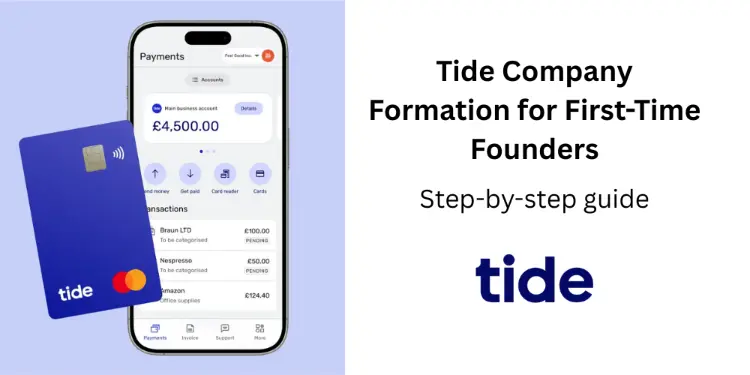 Introduction If you’re about to register your first limited company, you’re probably juggling a dozen questions at once: how to do it correctly, what you actually need to submit, how long it takes, and whether you’ll end up paying for extras you didn’t expect. This guide is built specifically around Tide company formation for startups,… Read more: Tide Company Formation for First-Time Founders