
Introduction
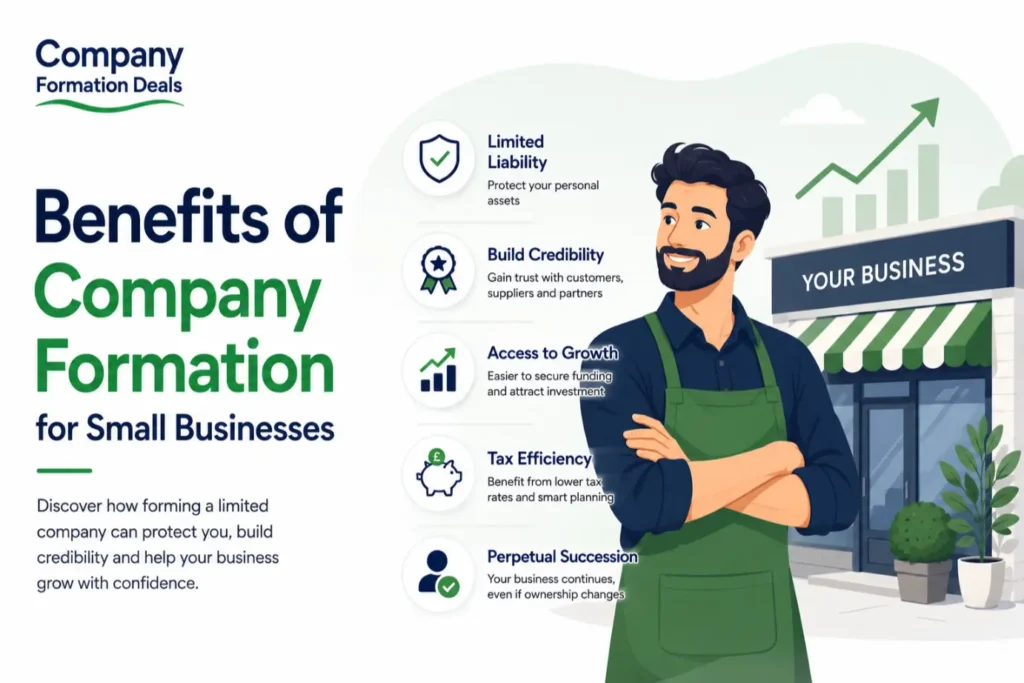
Understanding the benefits of company formation is essential for any small business owner who wants to operate professionally, protect their income, and build a business that can grow sustainably in the UK. Whether you are a sole trader, freelancer, startup founder, or SME owner, the decision to form a company is not just an administrative step-it is a strategic move that affects tax, risk, credibility, and long-term opportunity. If you’re still deciding what company formation actually involves, start with our complete Company Formation Explained guide before comparing the advantages.
This guide is written for UK-based small businesses in 2026 who want clarity, not confusion. Many founders reach a point where trading informally or as a sole trader starts to feel limiting. Tax bills rise, personal risk increases, and opportunities with banks, clients, or partners become harder to access. At that stage, understanding the advantages of company formation can be the difference between staying stuck and scaling confidently.
The benefits of company formation extend far beyond simply registering a business. In fact, understanding the main reasons to form a limited company helps many founders decide whether incorporation is the right next step.
However, not every business owner benefits from incorporation at the same stage. For some businesses, remaining a sole trader is perfectly appropriate. For others, forming a limited company can improve tax efficiency, reduce personal risk and create stronger foundations for growth. This guide explains the benefits of company formation objectively, helping you decide whether incorporation is the right move for your business.
Each benefit is explored in detail, showing how it impacts day-to-day operations, finances, and decision-making. You’ll also see how company formation compares to remaining a sole trader, what responsibilities come with incorporation, and how modern company formation services can reduce cost and friction when setting up.
If you are ready to register your business, there are also company formation offers available that combine registration with business banking incentives. Subject to eligibility and change, these offers can significantly reduce your startup costs. View the latest Tide company formation offer here.
By the end of this guide, you will understand exactly why form a limited company, which benefits matter most at your stage, and how to decide whether incorporation is the right next step for your small business.
Why You Can Trust This Guide
This guide has been written for UK sole traders, freelancers, startups and small business owners who are deciding whether incorporation is the right next step. Rather than focusing on one provider, we’ve reviewed the practical advantages of company formation alongside official UK guidance and the experiences of small businesses that have made the transition from sole trader to limited company. Our aim is to explain when incorporation genuinely adds value and when remaining a sole trader may still be the better option.
Contents
- Legal separation and limited liability
- Professional credibility and trust
- Tax efficiency and income flexibility
- Clear ownership and control
- Access to banking and finance
- Scalability and growth potential
- Client and supplier confidence
- Personal asset protection
- Structured compliance and governance
- When Company Formation Makes Sense
- Tide company formation offer and conditions
- General FAQs about company formation
- Recap
- Conclusion
Legal separation and limited liability
One of the most important advantages of company formation is the creation of legal separation between the business and the individual running it. When a small business forms a limited company, it becomes a distinct legal entity. This means the company can enter contracts, own assets, and incur liabilities independently of its directors.
For small business owners, this separation introduces limited liability. In practical terms, this means personal assets such as savings or property are generally protected if the business encounters financial difficulty. This is a major benefit of forming a limited company compared to operating as a sole trader, where personal and business liabilities are legally the same.
Limited liability allows small businesses to operate with greater confidence. Directors can take on clients, sign commercial contracts, and invest in growth without exposing their personal finances to unnecessary risk. Companies House provides official guidance on directors’ duties, filing obligations and maintaining a limited company. This protection becomes increasingly important as turnover increases or as the business enters more complex commercial arrangements.
Legal separation also brings clarity. Contracts are signed in the company’s name, not the individual’s, which reduces ambiguity around responsibility and accountability. For many clients and suppliers, this clarity is essential and is one of the reasons incorporated businesses are preferred over unregistered traders.
For small businesses planning to grow, legal separation is not just a safety measure-it is a foundation that supports sustainable expansion.
Tax Efficiency and Income Flexibility
One of the most compelling benefits of company formation for small businesses is improved tax efficiency. When operating as a limited company in the UK, profits are subject to corporation tax rather than income tax, which can result in significant savings depending on your earnings level and how income is structured. If you’re unsure how incorporation actually works in practice, our guide on How to Form a Company in the UK explains every stage of the registration process.
Unlike sole traders, limited company directors have flexibility in how they pay themselves. Income can be taken as a combination of salary and dividends, allowing business owners to manage tax exposure more strategically. While tax rules change over time, this flexibility remains one of the strongest advantages of company formation and a key reason why many small businesses choose to incorporate as they grow.
Company formation also enables clearer separation between personal and business finances. Business expenses are paid directly by the company, profits are retained within the business if needed, and income can be timed more effectively. This level of control is particularly useful for seasonal businesses or founders reinvesting profits to support growth.
Another important aspect is predictability. Corporation tax is applied at a fixed rate, whereas personal income tax increases progressively. For small businesses approaching higher income thresholds, incorporation can provide stability and planning certainty that is harder to achieve as a sole trader. HMRC also explains when and how newly incorporated businesses must register for Corporation Tax.
In addition, limited companies can be more tax-efficient when it comes to pensions, benefits, and long-term planning. Employer pension contributions, for example, are usually treated as an allowable business expense, offering another route to manage both tax and future security.
For many founders, tax efficiency alone does not justify incorporation. However, when combined with other company formation benefits for small businesses-such as protection, credibility, and scalability-it often becomes a decisive factor.
Clear Ownership and Control
Company formation introduces clarity around ownership and control, which is particularly valuable for small businesses planning to grow or collaborate. A limited company defines ownership through shares, making it clear who owns what percentage of the business and how decisions are made.
This clarity is one of the often-overlooked advantages of company formation. For sole founders, it provides a formal structure that separates personal decision-making from business governance. For businesses with multiple founders, it helps prevent disputes by documenting roles, responsibilities, and equity from the outset.
Directors are legally responsible for managing the company, while shareholders benefit from ownership without being involved in day-to-day operations unless they choose to be. This separation allows businesses to scale more effectively, bring in partners, or attract investment without restructuring the entire business.
Clear ownership also simplifies exit planning. Whether selling part of the business, transferring ownership, or planning succession, a limited company structure provides flexibility that sole trader models cannot match.
From an operational perspective, company formation encourages more disciplined decision-making. Formal records, shareholder agreements, and defined authority reduce ambiguity and help the business operate more professionally.
For small businesses aiming for longevity rather than short-term income, ownership clarity is a foundational benefit that supports growth, stability, and strategic planning.

Access to Banking and Finance
Improved access to banking and finance is a practical and immediate company formation benefit for small businesses. Many UK banks, lenders, and financial service providers prefer or require businesses to be incorporated before offering full functionality.
Limited companies typically find it easier to open dedicated business bank accounts, access overdrafts, apply for credit, and integrate with accounting platforms. These services are essential for managing cash flow, paying suppliers, and tracking financial performance accurately.
Incorporation also improves credibility with lenders. A registered company with transparent financial records is often seen as lower risk than an unincorporated trader. This perception can influence approval decisions, borrowing limits, and interest rates.
Many modern company formation packages include business banking as part of the setup process, reducing friction and speeding up access to financial infrastructure. Subject to eligibility, some offers also include cashback or fee reductions, which can offset early-stage costs.
If you are planning to register your business, you can view a current company formation option that includes banking incentives here.
For small businesses that rely on smooth financial operations, access to proper banking and finance is not optional. Company formation often acts as the gateway to these essential services.
Scalability and Growth Potential
Scalability is one of the most strategic advantages of company formation for small businesses that plan to grow beyond a single owner or short-term income goals. A limited company structure is designed to support expansion, whether that means increasing revenue, hiring staff, entering new markets, or attracting investment.
Unlike sole traders, limited companies can retain profits within the business. This allows founders to reinvest earnings into marketing, technology, staffing, or product development without immediately triggering personal tax liabilities. For growing businesses, this flexibility supports more sustainable cash flow management and long-term planning.
Company formation also makes it easier to bring new people into the business. Shares can be issued to investors, co-founders, or key employees, creating incentives and funding options that are not available to unincorporated businesses. This is particularly important for startups and SMEs aiming to scale quickly or secure external funding.
Operational growth is also simpler within a limited company. Employment contracts, supplier agreements, and commercial leases are clearer and more widely accepted when signed by an incorporated entity. Many larger organisations will only work with limited companies, making incorporation a prerequisite for scaling through partnerships or enterprise clients.
From a strategic perspective, forming a limited company signals intent. It shows that the business is built for growth rather than short-term trading. For small businesses with ambition, scalability is not an optional extra-it is a core reason why form a limited company.
Personal Asset Protection
Protecting personal assets is one of the most compelling reasons many founders explore the benefits of forming a limited company. When operating as a sole trader, there is no legal distinction between personal and business finances. This means personal assets can be at risk if the business faces claims or financial difficulties.
Company formation introduces a legal barrier that protects personal assets in most circumstances. Debts, contractual obligations, and liabilities generally remain with the company rather than the individual. This protection is particularly important for businesses operating in regulated industries or providing professional services.
Personal asset protection allows founders to operate with greater confidence. Decisions can be made based on business strategy rather than fear of personal financial exposure. This mindset shift often encourages more thoughtful investment and growth-focused decision-making.
While directors still have legal responsibilities and must act responsibly, the limited company structure reduces personal risk significantly when compared to unincorporated trading. This makes company formation an attractive option for small businesses reaching a stage where risk exposure is increasing.
For many business owners, protecting what they have built personally is just as important as growing the business itself. Company formation supports both objectives.
Structured Compliance and Governance
Structured compliance is one of the less obvious but highly valuable advantages of company formation for small businesses. When a business incorporates, it adopts a formal governance framework that defines responsibilities, reporting obligations, and operational discipline. While this introduces additional requirements, it also brings clarity and control.
A limited company must file annual accounts, submit a confirmation statement, and comply with corporation tax rules. These obligations encourage accurate record-keeping and financial transparency. For small businesses, this structure often leads to better oversight of income, expenses, and profitability, making it easier to plan and make informed decisions.
Governance also clarifies accountability. Directors have defined legal duties, which helps separate personal decision-making from business responsibility. This clarity reduces risk and ensures the business operates in line with UK regulations, protecting both the company and its owners.
Many founders find that structured compliance improves professionalism internally. Processes such as budgeting, forecasting, and financial reviews become routine rather than reactive. This discipline supports growth and reduces the likelihood of costly mistakes.
While compliance should not be taken lightly, modern tools and services have made ongoing management far more accessible. For small businesses that want stability and control, structured governance is a long-term benefit rather than a burden.
When Company Formation Makes Sense
Many founders assume they should incorporate as soon as they start trading, but that isn’t always the best approach. Company formation is usually most beneficial when your income is increasing, you want greater legal protection, clients expect you to trade as a limited company, or you’re planning to grow the business over the coming years.
If you’re only testing a business idea or earning occasional side income, remaining a sole trader may be simpler. As your business develops, however, the benefits of company formation often become much more significant.
If you’re still weighing up your options, compare the differences between sole trader and limited company structures before making your decision.

Choosing the Right Company Formation Service
Once you’ve decided that forming a limited company is the right move, the next step is choosing how to register.
Some founders apply directly through Companies House, while others use online company formation providers that combine registration with business banking, registered office services and ongoing compliance support.
The right provider depends on your budget, the level of support you need and any additional services you expect to use after incorporation.
Before registering, compare the leading UK company formation providers so you understand the differences in pricing, features and support. Our independent reviews explain how the UK’s leading providers compare on pricing, support, banking integrations and ongoing services. If you’re still deciding, start with our Compare Company Formation Agents guide before reading our detailed provider reviews.
When Company Formation May Not Be the Best Option
While the benefits of company formation are significant, incorporation isn’t automatically the right decision for every business. If you’re earning occasional side income, testing a new business idea or operating with minimal commercial risk, remaining a sole trader may be simpler and involve fewer administrative responsibilities. As your income, client base or legal obligations grow, the advantages of forming a limited company often become much more compelling. Choosing the right structure depends on your circumstances rather than following a one size fits all approach.
Tide Company Formation Offer and Conditions
For small businesses ready to act on the benefits of company formation, there is currently a bundled offer that combines company registration with business banking incentives. This option is designed to reduce upfront costs while helping founders access essential financial infrastructure from day one.
Under this offer, you can register your business for £14.99 and qualify for up to £200 cashback when opening and using a Tide business account. The offer is structured around practical usage rather than complex criteria, making it accessible for many early-stage businesses.
To unlock the cashback, you must use the promo code STARTUP200 when registering your company and opening your Tide account. After your account is active, spending £100 on your Tide card within 30 days qualifies you for a £75 cashback reward.
An additional £125 cashback is available if you deposit at least £5,000 into a Tide Instant Saver Account within seven days of opening your account and keep the balance there for one month. This second reward is optional and best suited to businesses with available capital.
This offer combines company formation, banking, and incentives into a single process, helping small businesses move from idea to operational setup quickly.
View the latest Tide company formation offer here and earn up to £200 cashback with Tide promo code STARTUP200.
General FAQs About Company Formation
What are the main benefits of company formation for small businesses?
The main benefits of company formation include limited liability, tax efficiency, professional credibility, and scalability for small businesses.
Why form a limited company instead of remaining a sole trader?
Many founders form a limited company to access the advantages of company formation such as reduced personal risk and better income structure.
Are there financial benefits of forming a limited company?
Yes, financial benefits of forming a limited company include corporation tax planning and greater income flexibility.
How does company formation benefit small businesses in the UK?
Company formation benefits small businesses in the UK by improving credibility, protecting personal assets, and supporting growth.
Is company formation worth it for small businesses?
For many founders, company formation is worth it due to the long-term advantages of company formation over sole trading.
Does company formation reduce personal liability?
Yes, one of the key benefits of forming a limited company is reduced personal liability.
Can freelancers benefit from company formation?
Freelancers can benefit from company formation when income grows and the advantages of company formation outweigh sole trader simplicity.
Does company formation improve access to banking and finance?
Yes, company formation improves access to business banking and financial services for small businesses.
Are there long-term advantages of company formation?
Long-term advantages of company formation include scalability, structured governance, and improved business stability.
When should a small business consider company formation?
A small business should consider company formation when seeking greater protection, tax efficiency, and professional credibility.
Is company formation the right choice for every small business?
No. Some businesses benefit from remaining sole traders during their earliest stages. Company formation becomes more attractive as income grows, commercial risks increase or the business plans to expand. The right choice depends on your individual circumstances rather than business size alone.
Does forming a limited company make my business more credible?
In many cases, yes. Trading as a limited company can improve credibility with customers, suppliers and lenders because it demonstrates a formal business structure, clear ownership and registration with Companies House. While credibility also depends on the quality of your products and services, incorporation can strengthen professional perception.
Recap
The benefits of company formation play a crucial role in helping small businesses operate more securely, efficiently, and professionally in the UK. From legal separation and personal asset protection to improved tax efficiency and access to finance, company formation benefits for small businesses extend far beyond basic compliance.
By forming a limited company, founders gain access to advantages that sole traders often lack. These include clearer ownership structures, enhanced credibility with clients and suppliers, and greater flexibility in how income is managed. For many growing businesses, these benefits of forming a limited company create a more sustainable foundation for long-term success.
Another key advantage of company formation is scalability. Limited companies are better positioned to reinvest profits, attract investment, and expand operations without exposing owners to unnecessary personal risk. This makes incorporation particularly attractive for startups, freelancers, and SMEs planning to grow beyond early-stage trading.
Once you’ve decided that incorporation is the right move, comparing company formation providers carefully will help you choose the service that best fits your business goals, budget and support requirements.
For UK entrepreneurs deciding when and why form a limited company, understanding these company formation benefits for small businesses is essential to making an informed and confident decision.
Conclusion
Understanding the benefits of company formation allows small business owners to take control of their legal structure, finances, and future growth. In the UK, forming a limited company offers clear advantages over sole trading, including limited liability, tax efficiency, professional credibility, and improved access to banking and finance.
For many founders, the decision to incorporate is driven by a combination of protection and opportunity. The benefits of forming a limited company reduce personal risk while creating a business structure that supports scalability and long-term planning. These advantages of company formation are particularly valuable as income increases or commercial responsibilities become more complex.
Company formation benefits for small businesses are not limited to large or high-growth companies. Freelancers, startups, and SMEs can all benefit from incorporation when the timing is right. With clearer governance, structured compliance, and enhanced trust from clients and suppliers, forming a limited company often marks a turning point in how a business operates and is perceived.
If you’ve decided that incorporation is the right step, take time to compare company formation providers, understand your legal responsibilities and choose the registration route that best supports your business goals. The cheapest option isn’t always the best value, especially if ongoing support, banking or compliance services are important to you.
Ready to register? If you are ready to act on the benefits of company formation, you can register your business and access banking incentives through the link below. Use the promo code STARTUP200 to qualify for the current offer, subject to eligibility and current terms and conditions.
Compare today’s leading company formation providers before choosing the service that’s right for your business. Start your company formation here.

* Tide offer terms and conditions: Use the code STARTUP200 when you register your business and open your Tide account. Spend £100 on your Tide card within 30 days to unlock your £75 cashback reward. In addition, if you deposit at least £5,000 into your Tide Instant Saver Account within 7 days of opening (and keep it there for one month), you’ll qualify for the additional £125 Tide Instant Saver offer.
Latest posts
- Companies House Price Increase (2026): What Changed and What It Means Today
 Introduction The Companies House price increase changed the cost of registering a limited company in the UK, making it more important than ever for founders to understand the current Companies… Read more: Companies House Price Increase (2026): What Changed and What It Means Today
 - Compare Company Formation agents
 Introduction Choosing the right way to register your limited company can feel deceptively simple-until you’re staring at dozens of “done-for-you” options with different pricing, add-ons, turnaround times, and upsells. If… Read more: Compare Company Formation agents
 - Best Priced Formation Services in the UK
 Introduction Choosing the right company formation provider is one of the first-and most important-decisions you’ll make when starting a business. With dozens of providers claiming to be the cheapest or… Read more: Best Priced Formation Services in the UK
 - Best Company Formation Services in the UK
 Introduction Choosing the best company formation service in the UK isn’t simply about finding the lowest registration price. It’s about selecting a provider that offers the right combination of value,… Read more: Best Company Formation Services in the UK
 - Benefits of Company Formation for Small Businesses
 Introduction Understanding the benefits of company formation is essential for any small business owner who wants to operate professionally, protect their income, and build a business that can grow sustainably… Read more: Benefits of Company Formation for Small Businesses
 - How to Register a Limited Company in the UK: 9 Easy Steps (2026)
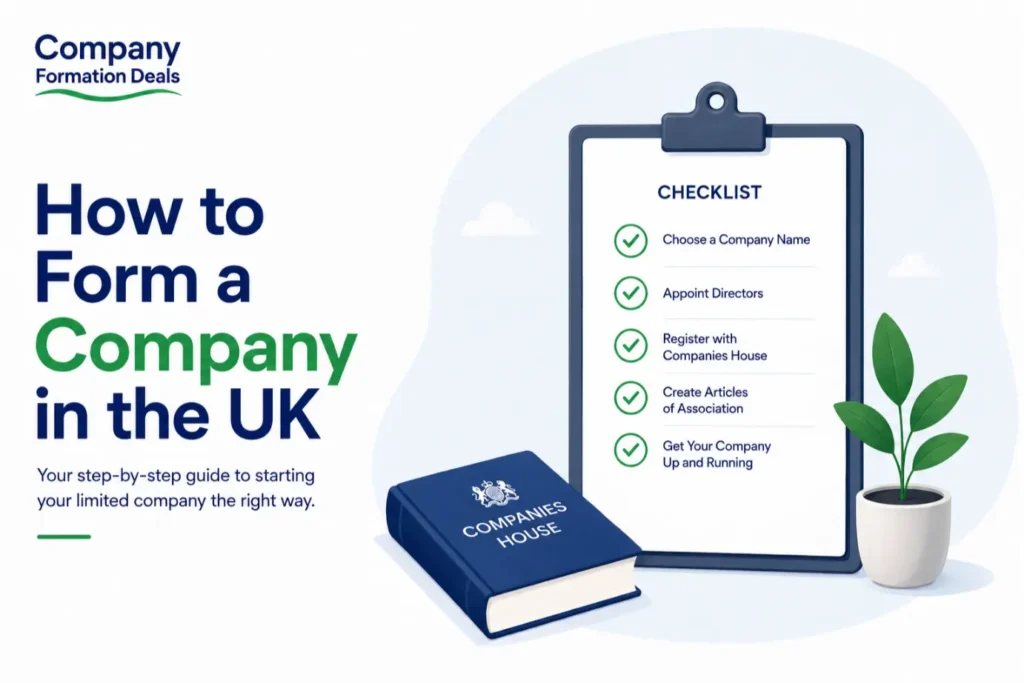 Introduction If you’re planning to start a business in the UK, understanding how to register a limited company correctly is one of the most important first decisions you’ll make. While… Read more: How to Register a Limited Company in the UK: 9 Easy Steps (2026)