
Introduction
If you’re planning to start a business in the UK, understanding how to register a limited company correctly is one of the most important first decisions you’ll make. While the UK is known for having a straightforward incorporation system, many founders still run into delays, rejections, or compliance issues simply because they don’t fully understand the process before starting.
This guide is designed specifically for UK sole traders, freelancers, startups, and SME founders who want a clear, modern, and practical explanation of how to register a limited company from start to finish. Whether you’re moving from self-employment to incorporation or launching a brand-new venture, this article walks you through the entire UK company registration process using a structured, easy-to-follow framework.
Within the first few steps, you’ll see exactly what information is required, how long each stage takes, and how to avoid the most common mistakes founders make when they start a company in the UK. We’ll also explain the process to set up a ltd company in a way that aligns with 2026 requirements-no outdated references, no unnecessary complexity.
To make things even simpler, this guide is built around a clear 9-step method. Each step is explained in plain English, so you can confidently form a ltd company step by step without needing prior legal or accounting knowledge. You’ll also learn what happens after your company is registered, including tax setup, compliance obligations, and banking.
For founders who want to save time and unlock extra value, we’ll reference an optional company formation and business banking offer from Tide. Eligible businesses can register their company for £14.99 and unlock up to £200 cashback when opening a Tide business account. This offer is optional, subject to eligibility, and may change-full terms are covered later in the guide so you can decide whether it’s right for you.
By the end of this guide, you’ll know exactly how to register a limited company, understand the UK company registration process from start to finish, know what information you’ll need before applying, and understand the key responsibilities that begin once your company has been incorporated.
If you’re still deciding whether incorporation is the right option, read our Company Formation Explained guide before beginning the registration process.
Why You Can Trust This Guide
This guide has been created for UK entrepreneurs, sole traders, freelancers and small business owners who want to register a limited company correctly the first time. We’ve combined the official Companies House registration process with practical guidance based on the questions first-time founders ask most often. Rather than simply explaining the paperwork, we also cover the decisions you’ll make before and after incorporation so you can register your company with confidence.
Contents
- Who Should Register a Limited Company?
- How to Register a Limited Company: The 9-Step UK Process
- Step 1: Choose and Check Your Company Name
- Step 2: Decide Directors, Shareholders, and Structure
- Step 3: Choose a Registered Office Address
- Step 4: Select the Correct SIC Codes
- Step 5: Prepare Your Company Documents
- Step 6: Submit Your Application
- Step 7: Receive Your Certificate of Incorporation
- Step 8: Register for Corporation Tax
- Step 9: Open a Business Bank Account
- Companies House vs Online Formation Services
- Optional Company Formation Offers
- General Company Formation FAQs
- Recap
- Conclusion
Who Should Register a Limited Company?
Registering a limited company is not mandatory for every business, but it is often the right move for founders whose income, risk exposure, or growth plans are increasing. Knowing whether this structure suits you depends on your current situation and long-term goals.
Many sole traders decide to start a company in the UK once their profits grow beyond a certain threshold. Limited companies pay corporation tax on profits rather than personal income tax, which can be more tax-efficient for higher earners. This makes the UK company registration process particularly attractive for contractors, consultants, and freelancers with stable or rising income.
Startups planning to scale, hire, or seek investment are also strong candidates for incorporation. Investors generally prefer limited companies because ownership is clearly defined through shares. When you form a ltd company step by step, you can allocate shares from the outset, making future funding and growth easier to manage.
Businesses operating in higher-risk sectors may benefit from limited liability protection. Because the company is legally separate, your personal assets are better protected if the business encounters financial difficulty. This is a major reason many founders choose the process to set up a ltd company rather than remaining self-employed.
However, limited companies do come with added responsibilities, including public disclosure and ongoing compliance. If your business is small, temporary, or low-risk, remaining a sole trader may still be appropriate. The key is understanding the trade-offs before you commit.
If you value credibility, scalability, and long-term structure, registering a limited company is often the right step-and following the correct process ensures you start on solid ground.
If you’re unsure whether incorporation is worthwhile, our Benefits of Company Formation guide explains the biggest advantages and the situations where remaining a sole trader may still make sense.
How to Register a Limited Company: The 9-Step UK Process
Understanding how to register a limited company becomes much simpler when the process is broken down into a clear sequence. While the UK company registration process is relatively fast compared to many countries, each step must be completed accurately to avoid delays, rejections, or compliance issues later.
This guide uses a 9-step framework designed specifically for founders who want to start a company in the UK with confidence. Whether you register directly or use an online service, these steps remain the same-the difference is how much guidance and automation you receive along the way.
The process to set up a ltd company begins before you submit anything. Early decisions, such as choosing a compliant company name and setting up the correct structure, determine how smoothly the rest of the registration flows. Many founders underestimate these early stages, which is why mistakes often happen before an application is even submitted.
Once preparation is complete, the formal registration itself is straightforward. Most companies are approved within 24 hours, and sometimes within a few hours, provided all details are correct. After approval, there are still critical steps to complete, including tax registration and banking, which are essential for operating legally.
By following this method, you can form a ltd company step by step without unnecessary admin, duplicated effort, or guesswork. The steps below are listed in the exact order they should be completed, ensuring nothing important is missed.
Step 1: Choose and Check Your Company Name
The first step to start a company in the UK is choosing a company name that meets legal requirements and reflects your brand. While this may seem simple, it is one of the most common reasons company applications are delayed or rejected.
Your company name must be unique and not too similar to an existing business registered in the UK. Even small variations in spelling or punctuation may still be considered “too similar,” particularly if the name could cause confusion. Before proceeding with the UK company registration process, it’s essential to check name availability thoroughly.
Certain words are restricted or sensitive and cannot be used without permission. These include terms that imply official status, regulated activities, or professional qualifications. If your name includes one of these words, additional approval may be required before you can form a ltd company step by step.
It’s also important to consider how your name will be used beyond registration. Check domain availability, social media handles, and whether the name aligns with your long-term plans. Changing a company name after registration is possible, but it adds unnecessary admin and cost.
Finally, ensure your chosen name ends with “Limited” or “Ltd,” as required for private limited companies. Once confirmed, this name becomes part of the public register and will appear on all official documents.
Companies House provides official guidance on company names, including restricted words and naming rules.

Step 2: Decide Directors, Shareholders, and Structure
Once you’ve chosen a company name, the next step in the process to set up a ltd company is defining who is involved and how ownership is structured. Every limited company must have at least one director, and most will also have one or more shareholders.
Directors are legally responsible for running the company and ensuring it complies with UK law. This includes filing accounts, submitting confirmation statements, and acting in the company’s best interests. When you start a company in the UK, directors must be over 16 and provide personal details that appear on the public register.
Shareholders own the company through shares. Even if you are the sole founder, you will still issue shares to yourself as part of the UK company registration process. The number and value of shares determine ownership percentages and voting rights.
Deciding your structure early is critical, particularly if you plan to bring in co-founders or investors later. Allocating shares correctly from the start avoids disputes and restructuring in the future. This step is a core part of how to register a limited company properly.
You’ll also need to identify any people with significant control (PSCs), such as individuals who own more than 25% of the company. This information is mandatory and must be kept up to date.
Step 3: Choose a Registered Office Address
Every limited company must have a registered office address in the UK. This is the official address used for government correspondence and is displayed on the public register, making it an important decision in the UK company registration process.
The address must be a physical UK location, not a PO box. It can be a home address, commercial premises, or a virtual office address. Many founders choose a virtual office to protect their privacy, particularly when forming a company from home.
All official mail from HMRC and Companies House is sent to this address, so it must be monitored regularly. Missing important correspondence can lead to penalties or compliance issues, even if your company is otherwise operating correctly.
Your registered office address does not have to be where you trade from, but it must remain accurate. If it changes, you are legally required to update it. This step may seem administrative, but it plays a key role in keeping your company compliant once you form a ltd company step by step.
Choosing the right address early ensures smoother communication and avoids unnecessary updates later in the process.
Step 4: Select the Correct SIC Codes
Selecting the correct SIC codes is a required but often underestimated part of the UK company registration process. SIC (Standard Industrial Classification) codes are used by Companies House and HMRC to understand what your business does, and they play a role in regulatory oversight, tax correspondence, and industry statistics.
When you start a company in the UK, you must choose at least one SIC code that best represents your main business activity. You can select up to four SIC codes if your company operates across multiple areas. Choosing the most accurate codes helps ensure that future communication from HMRC is relevant and that you are not mistakenly flagged for regulations that do not apply to your business.
Many founders rush this step and choose vague or incorrect codes just to move forward. While this won’t usually stop you from forming a company, it can create confusion later-particularly when registering for tax, applying for finance, or working with insurers and accountants. As part of the process to set up a ltd company correctly, it’s worth spending time reviewing the official SIC list and matching your actual activities as closely as possible.
If your business model evolves, SIC codes can be updated later, but changes require additional filings. Getting this right from the beginning helps streamline compliance once you form a ltd company step by step and begin trading.
Step 5: Prepare Your Company Documents
Before you can submit your application, you must prepare the core legal documents that define how your company operates. These documents are mandatory and form part of how to register a limited company properly in the UK.
The memorandum of association confirms that the initial shareholders agree to form the company. The articles of association set out the rules for running the company, including decision-making, share transfers, and director responsibilities. Most founders use standard model articles, which are suitable for the majority of small businesses.
You’ll also need to confirm details such as share allocation, voting rights, and any additional provisions if there are multiple shareholders. This step is particularly important for co-founded businesses, as it establishes expectations and governance from day one.
As part of the UK company registration process, these documents are submitted digitally and stored on the public record. Online formation services typically generate them automatically, reducing the risk of errors. If you register manually, you must ensure all documents are complete and accurate before submission.
Preparing these documents carefully helps avoid disputes, ensures legal clarity, and supports long-term stability as you start a company in the UK and grow.
Step 6: Submit Your Application
Once all details are prepared, you’re ready to register a company with Companies House by submitting your completed application online. This is the formal step where your company is reviewed and, if approved, officially incorporated.
Applications are typically submitted online and require confirmation of your company name, registered office address, director and shareholder details, SIC codes, and company documents. Accuracy is essential at this stage. Even small mistakes-such as misspelled names or mismatched addresses-can delay approval.
In most cases, applications are processed within 24 hours, and many are approved the same day. This efficiency is one of the reasons the UK is considered one of the easiest places to start a company in the UK. However, applications that include sensitive words or unusual structures may take longer.
Using an online formation service can reduce friction here by validating details before submission. This makes the process to set up a ltd company smoother, particularly for first-time founders who want reassurance that everything is done correctly.
Step 7: Receive Your Certificate of Incorporation
Once your application is approved, you’ll receive your Certificate of Incorporation. This document confirms that your company legally exists and includes your company number, incorporation date, and registered name.
Receiving this certificate marks a major milestone in how to register a limited company. From this point, your business can legally trade, sign contracts, and open a business bank account. The certificate also serves as proof of incorporation when dealing with suppliers, lenders, and service providers.
Alongside the certificate, you’ll receive digital copies of your company documents, including the memorandum and articles of association. These should be stored securely, as they are often required for future administrative tasks.
Although incorporation is complete at this stage, there are still important steps to follow. Tax registration and banking must be completed promptly to remain compliant and operational. Treat this moment as the transition from setup to active business formation as you continue to form a ltd company step by step.
Step 8: Register for Corporation Tax
After receiving your Certificate of Incorporation, your next legal obligation is to register your company for Corporation Tax with HMRC. This step is mandatory and must be completed within three months of your company starting to trade, even if you do not expect to make a profit immediately.
When founders start a company in the UK, many assume this happens automatically during incorporation, but it does not. Registering for Corporation Tax is a separate process and a critical part of the UK company registration process once your business becomes active.
You’ll need your company number, incorporation date, and details about your business activities to complete registration. HMRC uses this information to determine when your first Corporation Tax return and payment will be due. Failing to register on time can result in penalties, even for dormant companies that accidentally begin trading.
This step is a key part of the process to set up a ltd company properly, as it establishes your company’s tax obligations from the outset. Many online formation services prompt you to complete this registration automatically, reducing the risk of missing deadlines.
Completing Corporation Tax registration ensures that your company remains compliant and allows you to focus on operating and growing your business after you form a ltd company step by step.
HMRC provides detailed guidance explaining when newly incorporated businesses must register for Corporation Tax and how ongoing obligations work.
Step 9: Open a Business Bank Account
Opening a business bank account is the final step in the 9-step framework and a practical necessity once you register a limited company. A limited company is a separate legal entity, meaning its finances must be kept completely separate from your personal accounts.
A dedicated business account allows you to manage income, expenses, tax payments, and payroll correctly. It also makes accounting simpler and helps demonstrate professionalism when dealing with clients and suppliers. Most accountants strongly recommend opening an account immediately after incorporation.
When completing this step, many founders choose digital-first banks because they offer faster onboarding and integration with accounting software. Some providers allow you to open an account at the same time you start a company in the UK, removing the need for duplicate applications.
Using an integrated service can significantly reduce admin during the early stages of the UK company registration process. It also ensures you’re ready to trade as soon as your company is approved, rather than waiting days or weeks for banking access.
Once your account is live, you can confidently invoice clients, pay expenses, and operate as a fully formed limited company.
Common Mistakes When Registering a Limited Company
Even though the UK company registration process is relatively straightforward, small mistakes can delay approval or create unnecessary administration later. The most common issues include choosing a company name that’s too similar to an existing business, selecting incorrect SIC codes, entering inaccurate director information, forgetting to register for Corporation Tax after incorporation, or mixing personal and business finances.
Taking time to review every detail before submitting your application helps avoid delays and gives your company the strongest possible start.
If you’re unsure about any part of the application, it’s usually better to pause and check the official guidance or use a reputable company formation service than to submit incorrect information that could delay incorporation.
Companies House vs Online Formation Services
When deciding how to register a limited company, founders typically choose between registering directly with Companies House or using an online formation service. Both routes result in the same legal outcome, but the experience and added value can differ significantly.
Registering directly with Companies House is the lowest-cost option. You complete the forms yourself and manage each stage independently. This route suits founders who are confident in the UK company registration process and do not require additional guidance or bundled services.
Online formation services, however, are designed to simplify the process to set up a ltd company. These platforms guide you through each step, validate information before submission, and often include extras such as registered office addresses, compliance reminders, and business banking introductions.
For first-time founders, using an online service can reduce the risk of mistakes and save time. Some providers also offer financial incentives, such as cashback or discounted business tools, which can offset the slightly higher upfront cost.
We also review the leading providers in our Best Company Formation Services in the UK guide if you’re comparing features rather than simply choosing the cheapest option.
If speed, convenience, and added value matter to you, an online formation service is often the more efficient way to start a company in the UK.
If you’d like to compare providers before deciding, our Compare Company Formation Agents guide explains how the UK’s leading company formation services differ in pricing, features and ongoing support.
Optional Company Formation Offers
Eligible founders can choose to register their company and open a business account through Tide, which combines company formation with digital business banking.
The current Tide offer allows you to register your business for £14.99 and unlock up to £200 cashback when specific conditions are met. This offer is optional and subject to eligibility, and terms may change-always check current T&Cs before applying.
What the offer includes:
- Company registration for £14.99
- A Tide business current account
- Up to £200 cashback based on account activity
Eligibility requirements:
To qualify for the cashback, you must use the promo code STARTUP200 when registering.
Cashback conditions:
- Spend £100 on your Tide card within 30 days to receive £75 cashback
- Deposit at least £5,000 into a Tide Instant Saver Account within 7 days of opening
- Keep the £5,000 balance in the saver account for one month to unlock an additional £125
Important notes:
- Cashback is only available to new Tide customers
- Time limits apply from the date your account is opened
- Offer availability and conditions are subject to change-check current T&Cs
This option can reduce upfront costs and streamline the process to set up a ltd company, particularly for founders who want banking and registration handled in one journey.
Tide is one example of a provider that combines company registration with business banking. If you’d like a detailed assessment of the platform, read our independent Tide Company Formation Review before deciding whether it’s the right option for your business.

General Company Formation FAQs
How long does it take to register a limited company in the UK?
Most applications are approved within 24 hours when submitted correctly.
Can I start a company in the UK as a sole trader?
Yes, many founders transition from sole trader to limited company as their business grows.
Do I need an accountant to form a ltd company step by step?
An accountant is not required, but professional advice can be helpful for tax planning and compliance.
What documents do I need to register a company?
You need director details, a registered office address, SIC codes, and company structure information.
Is the UK company registration process fully online?
Yes, most companies are registered online through Companies House or approved formation services.
Can I change details after registration?
Yes, company details can be updated, but changes must be reported officially.
Do limited companies have ongoing costs?
Yes, including accounting, filing, and potential software or professional fees.
Is a business bank account legally required?
A limited company must keep finances separate, making a business account essential in practice.
Can non-UK residents register a UK company?
Yes, but additional checks and restrictions may apply depending on residency and business activity.
When do I need to register for VAT?
VAT registration is required once turnover exceeds the current threshold or voluntarily if beneficial.
Can I register a limited company myself?
Yes. You can register directly with Companies House or use an online company formation provider. Both routes create the same legal company. The main difference is the level of guidance, additional services and support included during the registration process.
Recap:
Registering a limited company in the UK doesn’t have to be complicated, but it does require following the correct steps in the right order. This guide has walked you through a clear 9-step framework, from choosing a compliant company name to opening a business bank account and registering for Corporation Tax.
By understanding the UK company registration process upfront, founders can avoid common mistakes, reduce delays, and start trading with confidence. Whether you’re transitioning from sole trader status or launching a brand-new venture, following a structured approach helps ensure your company is set up correctly from day one.
We’ve also covered the practical considerations that come after incorporation, including tax responsibilities, compliance, and banking. These steps are just as important as registration itself and play a key role in keeping your business compliant and scalable.
For founders who want to simplify the process to set up a ltd company, using an all-in-one registration and banking option can reduce admin and unlock additional value. Optional offers, such as cashback incentives, can help offset early costs-provided eligibility requirements are met.
If you’re ready to move forward, the next step is choosing the registration route that best fits your needs and starting your company journey with clarity and confidence.
Conclusion:
Knowing how to register a limited company properly gives you a strong foundation for building and growing a successful business. By following a clear, step-by-step framework, you can move from idea to incorporation without unnecessary confusion, delays, or compliance risks.
This guide has shown exactly how to register a limited company in the UK, covering each stage of the journey in practical detail-from preparation and submission to tax registration and banking. For UK founders, this structured approach makes it far easier to start a company in the UK with confidence, whether you’re a freelancer, contractor, startup founder, or small business owner.
Choosing the right registration method is just as important as completing the steps themselves. While some founders prefer to register directly, many benefit from using a guided service that combines company formation with business banking and compliance support. This can save time, reduce errors, and help you focus on running your business rather than managing admin.
Once you’ve decided to register your company, choose the registration route that best matches your experience, budget and support requirements. Some founders are comfortable registering directly with Companies House, while others prefer an online formation service that combines registration, business banking and ongoing compliance support. Taking a little extra time to compare your options now can make managing your business much easier after incorporation.
Register your company with Tide here and don’t forget to use the Tide promo code ‘STARTUP200’ to receive up to £200 cashback*.
Offer subject to eligibility and change. Always check current terms and conditions before proceeding.

* Tide offer terms and conditions: Use the code STARTUP200 when you register your business and open your Tide account. Spend £100 on your Tide card within 30 days to unlock your £75 cashback reward. In addition, if you deposit at least £5,000 into your Tide Instant Saver Account within 7 days of opening (and keep it there for one month), you’ll qualify for the additional £125 Tide Instant Saver offer.
Latest posts
- Companies House Price Increase (2026): What Changed and What It Means Today
 Introduction The Companies House price increase changed the cost of registering a limited company in the UK, making it more important than ever for founders to understand the current Companies… Read more: Companies House Price Increase (2026): What Changed and What It Means Today
 - Compare Company Formation agents
 Introduction Choosing the right way to register your limited company can feel deceptively simple-until you’re staring at dozens of “done-for-you” options with different pricing, add-ons, turnaround times, and upsells. If… Read more: Compare Company Formation agents
 - Best Priced Formation Services in the UK
 Introduction Choosing the right company formation provider is one of the first-and most important-decisions you’ll make when starting a business. With dozens of providers claiming to be the cheapest or… Read more: Best Priced Formation Services in the UK
 - Best Company Formation Services in the UK
 Introduction Choosing the best company formation service in the UK isn’t simply about finding the lowest registration price. It’s about selecting a provider that offers the right combination of value,… Read more: Best Company Formation Services in the UK
 - Benefits of Company Formation for Small Businesses
 Introduction Understanding the benefits of company formation is essential for any small business owner who wants to operate professionally, protect their income, and build a business that can grow sustainably… Read more: Benefits of Company Formation for Small Businesses
 - How to Register a Limited Company in the UK: 9 Easy Steps (2026)
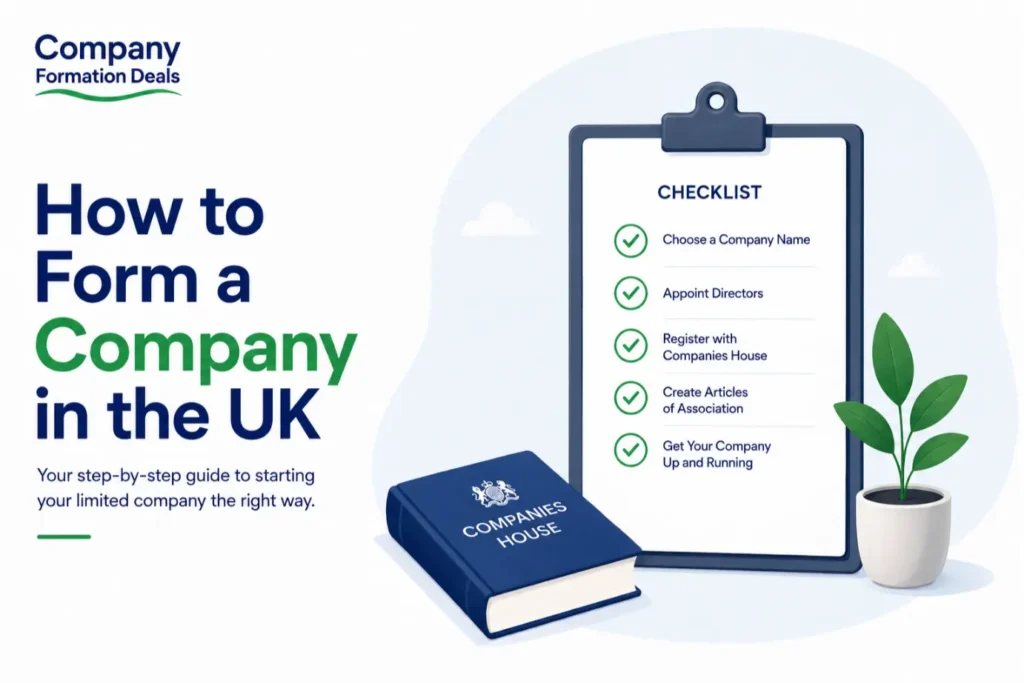 Introduction If you’re planning to start a business in the UK, understanding how to register a limited company correctly is one of the most important first decisions you’ll make. While… Read more: How to Register a Limited Company in the UK: 9 Easy Steps (2026)