
Introduction
Company formation explained in simple, practical terms is something many UK founders actively search for, but rarely find done properly. If you are a sole trader, freelancer, startup founder, or small business owner thinking about taking the next step, this guide is written specifically for you. The UK company formation process can look intimidating at first, especially when you are faced with legal language, Companies House requirements, business bank accounts, and decisions about structure. This article exists to remove that confusion. It also explains how to register a company in the UK, what information you’ll need and the decisions you should make before submitting your application.
For anyone asking what is company formation, the short answer is that it is the legal process of registering a business as a limited company in the UK. But for beginners, that definition alone does not help you understand when you should form a company, what you actually need to do, or whether it is the right move for your situation. That is why this company formation guide goes far deeper, breaking everything down step by step and in plain English.
This article is especially useful if you are currently self-employed, operating as a sole trader, or preparing to launch a new startup. Many founders delay company formation because they believe it is expensive, complicated, or time-consuming. In reality, modern online services have made company formation for beginners far more accessible than ever before, often costing less than a takeaway and taking less than 24 hours.
Throughout this guide, you will also see examples of optional tools that can simplify the process further. For example, some providers combine registration with a business bank account and offer cashback incentives. One such option currently allows you to register your business for £14.99 and earn up to £200 cashback when you meet eligibility criteria. This is subject to eligibility, and offers may change, so you should always check the latest terms before proceeding.
If you are unsure what do I need to form a company in the UK, or you want clarity on costs, timelines, responsibilities, and next steps after registration, you are in the right place. This article explains not only how company formation works, but also how to avoid common mistakes that can cost you time and money later.
By the end of this guide, you will understand what company formation is, whether forming a limited company is the right choice for your circumstances, how the registration process works from start to finish, and what responsibilities begin once your company has been incorporated. We’ve written this guide to answer the questions first-time founders ask most often, using plain English instead of legal jargon.
Why You Can Trust This Guide
This guide has been written for UK founders, freelancers, sole traders and small business owners who want to understand company formation before deciding which registration route to take. We’ve reviewed the company formation process, leading online formation providers and official government guidance to create an independent beginner-friendly resource that explains not only how incorporation works, but also when it makes sense to register a limited company.
Contents
- What Is Company Formation in the UK?
- Company Formation Explained: How the Process Works
- Who Should Form a Limited Company?
- Sole Trader vs Limited Company Comparison
- What Do I Need to Form a Company in the UK?
- Step-by-Step Company Formation Guide
- Company Formation Costs and Timelines
- What Happens After You Form a Company?
- Tide Company Formation Offer Explained
- Common Mistakes to Avoid
- General FAQs About Company Formation
- Recap
- Conclusion
What Is Company Formation in the UK?
Understanding what is company formation is essential before deciding whether it is right for your business. In the UK, company formation refers to the legal process of registering a business as a limited company with Companies House. Once registered, your company becomes a separate legal entity, distinct from you as an individual.
For company formation for beginners, this distinction is one of the most important concepts to grasp. Unlike sole traders, limited company owners are not personally responsible for business debts beyond their investment in the company. This is known as limited liability and is one of the main reasons founders choose to incorporate.
When a company is formed, it receives a unique company number and is officially recognised by UK law. This allows the business to enter contracts, hire employees, open business bank accounts, and trade under a protected company name. Many people mistakenly believe company formation is only for large businesses, but in reality, thousands of freelancers and small startups incorporate every year.
A proper company formation guide should also explain that incorporation is not just an administrative step-it affects how you pay tax, how you take income from the business, and what reporting responsibilities you have. Limited companies pay Corporation Tax on profits, and directors usually pay themselves through a mix of salary and dividends.
Another key point in understanding what is company formation is timing. You do not need to form a company on day one of your business journey. Many founders start as sole traders and incorporate later when income increases, risk exposure grows, or clients prefer working with limited companies. This flexibility is why company formation for beginners should always be considered in the context of your specific goals.
In the UK, the formation process itself is relatively fast. Most online applications are processed within 24 hours, and some are approved on the same day. This speed has removed many historical barriers that once made incorporation feel daunting.
Ultimately, company formation is about creating a formal business structure that supports growth, credibility, and protection. Once you understand this foundation, the practical steps become far easier to navigate
Company Formation Explained: How the Process Works:
Company formation explained properly means walking through the process from start to finish without legal jargon. At its core, forming a company in the UK involves submitting key details to Companies House and setting up the legal framework your business will operate under.
The process begins with choosing a company name. This name must be unique and comply with UK naming rules, including restrictions on sensitive words. Companies House publishes detailed guidance explaining which names are permitted and which words require additional approval. Once approved, the name becomes legally protected, preventing other companies from registering under the same or a confusingly similar name.
Next, you provide a registered office address. This is the official address of the company and will appear on the public register. Many founders use a virtual office address to protect their home address, which is a common and fully legal approach in the UK.
You then appoint at least one director and, in most cases, at least one shareholder. For many startups and freelancers, the same person fills both roles. This is completely normal and widely supported in UK company formation for beginners.
Another critical part of the process is defining your SIC codes. These codes describe what your company does and help government bodies understand your business activities. Choosing accurate SIC codes is more important than many realise, as they can affect banking and compliance later.
Finally, you submit your application and pay the registration fee. You can complete the application directly through Companies House or use an authorised company formation agent that manages the submission on your behalf. Once approved, you receive a Certificate of Incorporation confirming that your company legally exists. From this point onward, you are responsible for meeting ongoing obligations such as filing confirmation statements and annual accounts.
Modern providers have simplified this journey significantly by bundling company registration with business banking. For example, Tide offers integrated company formation options that allow you to register and open a business account in one flow, reducing admin and speeding up launch timelines. If you’re comparing different registration services, our guide to the best UK company formation services explains how the leading providers compare on price, features and support. You can also use our Compare Company Formation Agents guide if you’re deciding between the UK’s best-known incorporation services.
When company formation explained in this structured way, it becomes clear that the process is not complex-it is simply unfamiliar. With the right guidance and tools, most UK founders can complete everything confidently in a single sitting.
Who Should Form a Limited Company?:
Company formation for beginners often starts with a single, important question: is forming a limited company actually right for me? The answer depends less on your job title and more on how your business operates, your income level, and your appetite for risk and growth. While not every UK business needs to incorporate immediately, many reach a point where company formation becomes the smarter option.
Limited companies are particularly suitable for founders who are generating consistent income and want clearer separation between their personal finances and their business. If you are earning above a modest threshold, the tax efficiency of a limited company can become attractive. Unlike sole traders, limited companies pay Corporation Tax on profits, which can be lower than personal income tax at higher earnings levels. This is why many freelancers and consultants incorporate once revenue stabilises.
Another strong reason to consider company formation is risk protection. If your work involves contracts, liabilities, or client disputes, limited liability can protect your personal assets. This is especially relevant for digital agencies, contractors, ecommerce sellers, and anyone working with large clients who require formal contracts. Understanding what is company formation in this context helps clarify that incorporation is as much about protection as it is about professionalism.
Company formation for beginners is also common among startups seeking funding or partnerships. Investors, lenders, and even some suppliers prefer working with limited companies because the structure feels more credible and transparent. Having “Ltd” at the end of your business name can improve trust and open doors that might otherwise remain closed.
However, it is equally important to understand who may not need to incorporate yet. Side hustles, very low-risk businesses, and early-stage ventures with minimal income may find sole trader status simpler in the short term. A good company formation guide should emphasise that incorporation is a strategic decision, not a legal obligation for every business.
Ultimately, the right time to form a company is when the benefits-tax efficiency, protection, credibility, and scalability-outweigh the additional responsibilities. Knowing when that balance tips in your favour is key to making a confident decision.

Sole Trader vs Limited Company Comparison:
One of the most common areas of confusion in company formation for beginners is the difference between operating as a sole trader and forming a limited company. Both structures are legal and widely used in the UK, but they function very differently in practice. Understanding these differences is essential before you decide to incorporate.
A sole trader is the simplest business structure. You register with HMRC, keep records of income and expenses, and pay Income Tax and National Insurance on profits. There is very little administration, and setup costs are minimal. For many people starting out, this simplicity is appealing. However, from a company formation explained perspective, sole trading offers no legal separation between you and your business. You are personally responsible for all debts and liabilities.
A limited company, by contrast, is a separate legal entity. This means the business can own assets, enter contracts, and be liable for debts independently of you as an individual. This distinction is at the heart of what is company formation and why it matters. While limited companies come with additional responsibilities-such as filing accounts and confirmation statements-they also provide structure and protection.
Tax treatment is another major difference. Sole traders pay tax on all profits as personal income, whereas limited company directors can choose how they extract income, often combining salary and dividends. This flexibility is a key reason many people follow a company formation guide once profits increase.
Credibility also plays a role. Some clients and partners prefer dealing with limited companies, especially in professional services, technology, and B2B sectors. For businesses aiming to scale, hire staff, or seek investment, company formation for beginners often becomes a natural next step rather than an optional upgrade.
There is no universally correct choice. The decision depends on income, risk, long-term plans, and personal preference. A thoughtful comparison ensures that when you do form a company, it is done for the right reasons and at the right time. If you’re still weighing up the advantages of incorporation, our guide to the Benefits of Company Formation explains the biggest reasons UK businesses choose to become limited companies.
What Do I Need to Form a Company in the UK?
A frequent question from new founders is: what do I need to form a company in the UK? The good news is that the requirements are straightforward, and most people already have everything they need. Understanding these basics is a core part of any company formation guide.
First, you need a company name that complies with UK regulations. The name must be unique and not misleading, and it cannot include restricted words without permission. Checking availability is quick and can be done online before you apply. This step is often where company formation for beginners feels more daunting than it actually is.
Second, you need a registered office address. This must be a physical UK address where official correspondence can be sent. It does not have to be your trading address, and many founders choose a virtual office to keep their home address private. This address will appear on the public register.
You will also need at least one director. Directors are legally responsible for running the company and ensuring compliance. Most small UK companies start with a single director who is also the sole shareholder, which is perfectly acceptable. Shareholders own the company and receive dividends if profits are distributed.
Another requirement is choosing SIC codes. These codes describe your business activities and help classify your company. Selecting accurate codes is important, as they influence how your company is viewed by banks and regulators.
Finally, you need to submit incorporation details and pay the registration fee. Once approved, you receive a Certificate of Incorporation confirming your company legally exists. From this point, company formation explained becomes less about registration and more about ongoing management.
When broken down clearly, what do I need to form a company in the UK is far less intimidating than many expect. With the right preparation, the entire process can be completed quickly and confidently.
Step-by-Step Company Formation Guide:
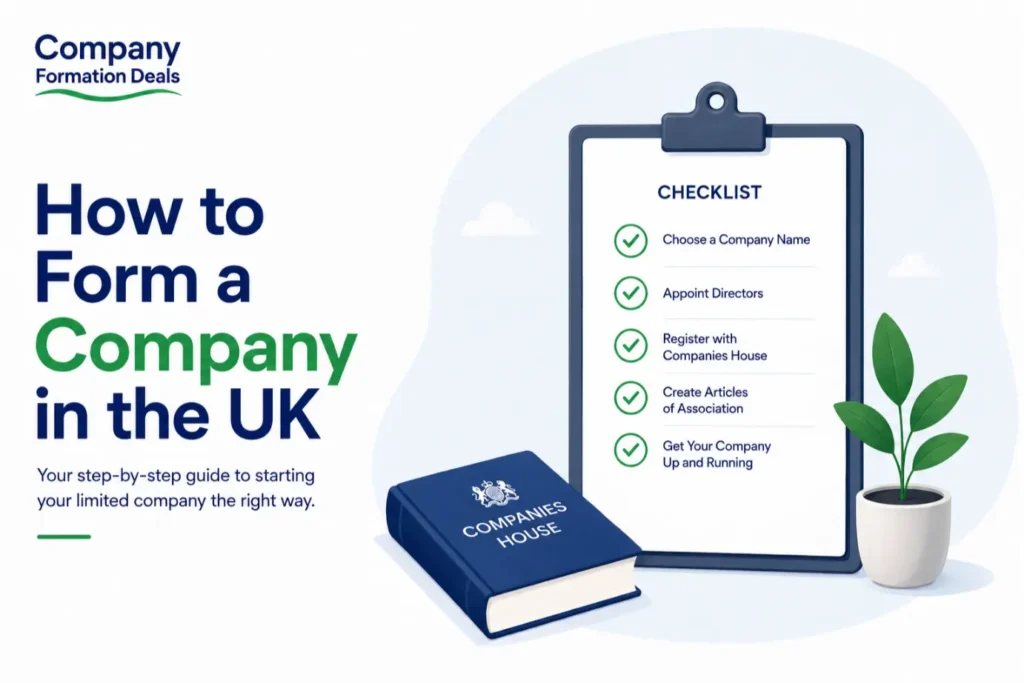
A clear, step-by-step walkthrough is essential for company formation for beginners, because uncertainty often causes unnecessary delays. This section breaks down the UK company formation process into practical stages so you can follow it confidently from start to finish. If you’re ready to register after reading this guide, our detailed How to Form a Company in the UK walkthrough covers every stage of the application process.
Step one is deciding whether a limited company is the right structure for your business. This decision should be based on income expectations, risk exposure, and long-term plans. If you have already concluded that incorporation is appropriate, you can move directly into the formation steps.
Step two is choosing your company name. Your chosen name must be unique and comply with UK naming regulations. It cannot be misleading, offensive, or include restricted terms unless you have approval. Many founders check availability before finalising branding to avoid rework later.
Step three involves selecting a registered office address. This address must be located in the UK and will be published on the public register. For company formation for beginners working from home, using a virtual office address is common and helps protect personal privacy while maintaining compliance.
Step four is appointing directors and shareholders. At least one director is required, and there is no maximum number. Most small companies begin with one director and one shareholder, often the same person. This simplicity is why company formation explained properly should emphasise that complex ownership structures are not mandatory.
Step five is defining your SIC codes. These codes describe your company’s activities and should accurately reflect what you do. While they can be updated later, selecting appropriate codes from the outset avoids confusion with banks and service providers.
Step six is submitting your incorporation application. This can be done directly via Companies House or through a formation service. Once submitted, most applications are approved within 24 hours.
Finally, once approved, you receive your Certificate of Incorporation. At this point, your company legally exists, and you can begin trading, opening bank accounts, and entering contracts. Understanding this step-by-step company formation guide removes much of the anxiety surrounding incorporation.
Company Formation Costs and Timelines:
One of the biggest misconceptions in company formation for beginners is that incorporating a business is expensive or slow. In reality, UK company formation is both affordable and efficient, particularly when compared to many other countries.
The basic cost of registering a limited company directly with Companies House is low, making company formation accessible even for early-stage founders. Online applications are typically processed within 24 hours, while postal applications take longer. This speed is a key reason many founders decide to incorporate sooner rather than later.
Additional costs may arise depending on how you choose to form your company. Many founders use formation services that bundle registration with additional features such as business bank account setup, registered office addresses, and compliance reminders. While these services charge a small fee, they often save time and reduce the risk of mistakes.
From a company formation explained perspective, it is important to understand that formation costs are not the only consideration. Ongoing costs include accounting support, software subscriptions, and annual filing obligations. While these are manageable, they should be factored into your decision.
Timelines after incorporation are equally important. Once your company is formed, you can usually open a business bank account immediately, though approval times vary by provider. You must also register for Corporation Tax within a set period and begin keeping proper financial records from day one.
Overall, the UK offers one of the fastest and most affordable incorporation systems globally. For company formation for beginners, understanding realistic costs and timelines helps set expectations and avoid unnecessary delays or surprises.
What Happens After You Form a Company?
Company formation explained fully does not end once your company is registered. In many ways, incorporation is just the beginning. Understanding what happens next is crucial for staying compliant and running your business smoothly.
One of the first steps after incorporation is opening a business bank account. Limited companies are required to keep business finances separate from personal finances. A dedicated account simplifies bookkeeping, tax reporting, and cash flow management. Many founders choose digital banking providers for speed and convenience.
You must also register for Corporation Tax within the required timeframe. HMRC provides official guidance on Corporation Tax registration and ongoing filing requirements, which every new company director should understand. Even if your company is not yet profitable, registration is mandatory. Failing to do so can result in penalties, which is why company formation for beginners should always include this step.
Another responsibility is maintaining proper records. This includes tracking income, expenses, invoices, and receipts. Using accounting software from the start reduces stress and ensures accuracy. It also makes working with an accountant far easier.
Ongoing compliance is another consideration. Limited companies must file annual accounts and a confirmation statement each year. These filings confirm that your company information is up to date and that financial reporting requirements are met.
Finally, directors have legal duties to act in the best interests of the company. This includes making informed decisions, avoiding conflicts of interest, and ensuring taxes are paid on time. While this may sound daunting, most responsibilities are straightforward with the right systems in place.
Understanding what happens after you form a company ensures that company formation explained is not just about registration, but about building a sustainable, compliant business from day one.
Tide Company Formation Offer Explained:
For UK founders looking to reduce upfront costs, there is currently a company formation promotion available through Tide that combines registration with a business bank account and cashback incentives. This offer is particularly appealing for company formation for beginners because it simplifies setup while providing financial rewards when eligibility conditions are met.
The core offer allows you to register your business for £14.99 and unlock up to £200 cashback. The company formation itself includes standard registration with Companies House, and the process is integrated directly into the Tide account application. This means you complete company formation and banking setup in one streamlined journey rather than managing multiple providers.
To access the cashback, specific conditions apply. First, you must use the promo code STARTUP200 during registration. Once your company is formed and your Tide account is opened, you must spend £100 using your Tide card within 30 days. After meeting this condition, you unlock a £75 cashback reward.
In addition to this, there is a second incentive tied to Tide’s Instant Saver Account. If you deposit at least £5,000 into the saver account within seven days of opening it and maintain that balance for one full month, you qualify for an additional £125 cashback. Combined, these incentives total up to £200.
This promotion is designed for founders who are actively trading or planning to trade soon. While the company formation explained process remains the same regardless of provider, this type of offer can reduce initial costs and provide early cash flow support.
It is important to note that all offers are subject to eligibility and may change. Cashback is not guaranteed unless all conditions are met within the specified timeframes. Always check the most up-to-date terms and conditions before proceeding.
For beginners asking what do I need to form a company in the UK, this type of bundled offer can remove friction by handling registration, banking, and early-stage incentives in one place, making it easier to move from idea to trading company.

Common Company Formation Mistakes to Avoid:
One of the biggest advantages of understanding company formation explained clearly is being able to avoid mistakes that many UK founders make in their first year. While company formation for beginners is more accessible than ever, errors at the setup stage can still lead to unnecessary costs, compliance issues, or delays later on. Knowing what to watch out for can save time, money, and stress.
A common mistake is forming a company too early or for the wrong reasons. Some founders incorporate before they have validated their business idea or generated consistent income. While company formation is relatively inexpensive, a limited company comes with ongoing responsibilities such as filing accounts and confirmation statements. A good company formation guide should always emphasise that incorporation is a strategic decision, not a default requirement.
Another frequent issue is choosing an unsuitable company name. New founders sometimes select names that are too similar to existing businesses, include restricted words, or do not reflect their long-term plans. Changing a company name later is possible but can create branding and administrative complications. Taking time to research and choose carefully is an important early step.
Using a home address without considering privacy is another mistake often seen in company formation for beginners. The registered office address appears on the public register, and many founders are surprised to discover their personal address is visible online. This is why virtual office addresses are commonly used and should be considered before registering.
Incorrect or vague SIC codes can also cause problems. While they may seem minor, SIC codes help define what your company does and are sometimes reviewed by banks and service providers. Choosing codes that do not accurately represent your activities can delay account approvals or raise compliance questions later.
Failing to open a dedicated business bank account promptly is another avoidable issue. Limited companies are legally separate from their owners, and mixing personal and business finances can create accounting and tax complications. Setting up banking immediately after incorporation supports better financial discipline from day one.
Some founders also underestimate ongoing compliance. Company formation explained properly should always include what happens after registration, including Corporation Tax registration, annual filings, and record keeping. Missing deadlines can result in penalties and unnecessary stress.
Finally, ignoring professional advice altogether can be a mistake. While you do not need an accountant to form a company, guidance on tax efficiency, dividends, and compliance can be valuable as your business grows. Avoiding these common pitfalls helps ensure your company formation experience is smooth, compliant, and built for long-term success.
How to Choose the Right Company Formation Service
Once you’ve decided to form a limited company, the next decision is choosing how to register it. Some founders apply directly through Companies House, while others use an online company formation provider that bundles registration with services such as business banking, registered office addresses and compliance reminders.
There is no single best provider for every business. The right choice depends on your budget, whether you need additional support, how quickly you want to begin trading and whether you value integrated services.
If you’re comparing providers, our independent reviews explain how the leading UK company formation services differ in pricing, features and suitability for different business types.
If you’re comparing providers, our independent reviews can help you make an informed decision. Start by reading our Compare Company Formation Agents guide, then explore our detailed Tide Company Formation Review, 1st Formations Review and ANNA Money Company Formation Review before deciding which service best matches your business.
When Professional Advice May Be Worth Considering
Most straightforward UK company formations can be completed without professional assistance. However, if you’re setting up multiple shareholders, issuing different share classes, expecting external investment or operating in a regulated industry, it’s worth speaking to an accountant or solicitor before incorporating. Getting the structure right from the beginning can save significant time and cost later.
FAQs:
What is company formation in the UK?
Company formation is the legal process of registering a business as a limited company with Companies House, creating a separate legal entity.
Is company formation required for all businesses?
No, company formation is optional, but many founders choose it for liability protection, credibility, and tax efficiency.
Is company formation explained differently for beginners?
Yes, company formation for beginners focuses on simplified steps, legal basics, and avoiding common early mistakes.
How long does company formation take in the UK?
Most online applications are approved within 24 hours, making UK company formation one of the fastest globally.
What do I need to form a company in the UK?
You need a company name, UK registered office address, at least one director, one shareholder, and SIC codes.
Can one person form a limited company?
Yes, a single individual can be both director and shareholder, which is common in company formation for beginners.
Do I need an accountant to form a company?
An accountant is not required for company formation, but professional advice can help with tax and compliance.
Can I change details after company formation?
Yes, company details such as addresses, directors, and SIC codes can be updated after incorporation.
Is company formation suitable for freelancers?
Yes, many freelancers form limited companies once income grows or clients require a company structure.
What taxes apply after company formation?
Limited companies pay Corporation Tax on profits, and directors pay personal tax on salary and dividends.
Recap:
Company formation explained clearly shows that incorporating a business in the UK is no longer complex, expensive, or reserved for large organisations. For sole traders, freelancers, startups, and SMEs, company formation for beginners offers a structured way to protect personal assets, improve credibility, and prepare for growth.
This guide has covered what is company formation, who it is best suited for, and what do I need to form a company in the UK. By breaking the process into logical steps, comparing structures, and explaining post-formation responsibilities, the goal has been to remove uncertainty and help you make an informed decision.
For founders ready to move forward, modern providers make company formation faster and more accessible than ever. Bundled services that combine registration with business banking can save time and reduce friction, particularly in the early stages of trading. Cashback incentives can also help offset startup costs, provided eligibility requirements are met.
If you are confident that incorporation aligns with your business goals, now is the right time to take action. Using a guided service can help ensure accuracy, compliance, and a smoother launch while allowing you to focus on building your business rather than navigating administration.
Conclusion:
Company formation explained in a practical, beginner-focused way empowers UK founders to take the next step with confidence. Rather than viewing incorporation as a legal hurdle, it should be seen as a strategic move that supports protection, professionalism, and long-term growth.
For many businesses, company formation for beginners becomes the turning point between informal trading and building a scalable operation. Understanding what is company formation, what do I need to form a company in the UK, and how the process works removes fear and replaces it with clarity.
If you’ve decided that a limited company is the right structure for your business, choosing the right formation provider can make the registration process quicker, easier and less stressful. Compare providers carefully, understand your legal responsibilities, and select the option that best matches your business goals rather than simply choosing the cheapest service.
To register your business for £14.99 and unlock up to £200 cashback when eligible, use the link below and enter the promo code STARTUP200 during signup.
👉 https://companyformationdeals.co.uk/recommends/tide-company-formation/
Remember, offers are subject to change, so always check the latest terms and conditions before proceeding. With the right preparation and tools, company formation can be the foundation for a compliant, credible, and successful UK business.

* Tide offer terms and conditions: Use the code STARTUP200 when you register your business and open your Tide account. Spend £100 on your Tide card within 30 days to unlock your £75 cashback reward. In addition, if you deposit at least £5,000 into your Tide Instant Saver Account within 7 days of opening (and keep it there for one month), you’ll qualify for the additional £125 Tide Instant Saver offer.
- Companies House Price Increase (2026): What Changed and What It Means Today
 Introduction The Companies House price increase changed the cost of registering a limited company in the UK, making it more important than ever for founders to understand the current Companies… Read more: Companies House Price Increase (2026): What Changed and What It Means Today
 - Compare Company Formation agents
 Introduction Choosing the right way to register your limited company can feel deceptively simple-until you’re staring at dozens of “done-for-you” options with different pricing, add-ons, turnaround times, and upsells. If… Read more: Compare Company Formation agents
 - Best Priced Formation Services in the UK
 Introduction Choosing the right company formation provider is one of the first-and most important-decisions you’ll make when starting a business. With dozens of providers claiming to be the cheapest or… Read more: Best Priced Formation Services in the UK
 - Best Company Formation Services in the UK
 Introduction Choosing the best company formation service in the UK isn’t simply about finding the lowest registration price. It’s about selecting a provider that offers the right combination of value,… Read more: Best Company Formation Services in the UK
 - Benefits of Company Formation for Small Businesses
 Introduction Understanding the benefits of company formation is essential for any small business owner who wants to operate professionally, protect their income, and build a business that can grow sustainably… Read more: Benefits of Company Formation for Small Businesses
 - How to Register a Limited Company in the UK: 9 Easy Steps (2026)
 Introduction If you’re planning to start a business in the UK, understanding how to register a limited company correctly is one of the most important first decisions you’ll make. While… Read more: How to Register a Limited Company in the UK: 9 Easy Steps (2026)