

Introduction
If you want to form a limited company with Tide, this guide explains every stage of the process, from preparing your company details to receiving approval from Companies House and activating your Tide business account. It is designed for sole traders, freelancers, startups and small business owners who want to register a limited company with Tide without unnecessary confusion or duplicated admin.
Tide combines company formation with an application for a Tide business account. This means you can submit your incorporation details, wait for Companies House approval and complete your initial banking setup through one connected journey. This guide focuses on the practical actions you need to take, the information you must prepare and the checks you should complete before submitting your application.
For a broader explanation of the service, read our Tide Company Formation Explained guide. To see our overall assessment of the provider, visit our Tide Company Formation Review.
You can currently register a limited company with Tide from £14.99. Eligible new customers may also qualify for up to £200 cashback by entering promo code STARTUP200 and meeting the relevant account activity requirements. Start your Tide company registration
Offer disclaimer: Registration pricing, cashback and eligibility requirements may change. Check the latest Tide terms before applying.
The guide answers the main question clearly: how do you form a limited company with Tide from start to finish? It covers what to prepare, how to complete each stage of the application, what happens after submission and the first actions to take once your company is incorporated.
A brief summary of the current Tide offer is included later, but the detailed cashback conditions are covered separately in our Tide Company Formation Promo Code guide.
This guide covers straightforward UK private limited company formations. It is not personalised legal, accounting or tax advice. Consider obtaining professional advice if your company will have complex share classes, overseas directors, investor agreements, regulated activities or unusual ownership arrangements.
Begin now: https://companyformationdeals.co.uk/recommends/tide-company-formation/ (use code STARTUP200 if you’re aiming for the cashback, subject to eligibility).
How to Form a Limited Company with Tide at a Glance
You can form a limited company with Tide by completing the following seven stages.
- Check that your proposed company name is available.
- Choose your registered office and service addresses.
- Enter the details of each director and shareholder.
- Select the most appropriate SIC code for your business activity.
- Confirm the number, type and ownership of the company shares.
- Review your application, pay the registration fee and submit it through Tide.
- Wait for Companies House approval, then complete any remaining Tide account checks.
Most founders can form a limited company with Tide online without using a solicitor or accountant. However, incomplete or inconsistent information can still delay the application.
Contents
- What you need before you start with Tide
- Is Tide right for your business goals?
- How to form a limited company with Tide step by step
- Choosing your company name, SIC codes, and registered office
- Directors, shareholders, and share structure made simple
- What happens after Companies House approval
- Tide limited company setup: banking and first admin tasks
- Costs, timelines, and common delays to avoid
- Tide vs other ways to register a limited company
- Offer conditions: register for £14.99 and get up to £200 cashback
- FAQs about the offer and promo code STARTUP200
- General FAQs about Tide company formation
- Recap
- Conclusion
What You Need to Register a Limited Company with Tide
Before you register a limited company with Tide, prepare the information that Companies House and Tide will need. Most straightforward applications can be completed online, but missing or inconsistent details can interrupt the process.
Have the following ready:
• Your proposed company name and at least one alternative
• A registered office address
• A service address for each director
• The full legal details of every director
• The names and ownership percentages of all shareholders
• Your proposed share structure
• One or more suitable SIC codes
• Valid identity documents where requested
• A payment method for the registration fee
You do not need to understand every Companies House term to form a limited company with Tide, but you remain responsible for the information submitted. Check names, dates, addresses, ownership details and SIC codes before continuing.
If you want to start the process now, you can use: https://companyformationdeals.co.uk/recommends/tide-company-formation/ (code STARTUP200 may apply, subject to eligibility and current T&Cs).

Who Should Register a Limited Company with Tide?
Choosing a formation route also affects what happens after incorporation. Founders who form a limited company with Tide can move from registration into business account setup through one connected journey. This can suit people who prefer a guided process rather than arranging formation and banking separately.
Tide tends to suit UK founders who want simplicity and speed. If you’re a freelancer moving from sole trader to Ltd, you’ll likely value a clean setup with fewer admin detours. If you’re a startup founder, you may like having company formation and banking connected, because you’ll quickly need a business account for invoicing clients, collecting revenue, and paying tools or suppliers. In that context, can I form a limited company through tide becomes less about “can I” and more about “does it remove friction?” For many straightforward cases, it does.
That said, Tide won’t be the best choice for every scenario. If you need complex share structures (multiple share classes, preference shares, detailed vesting arrangements), or if you’re setting up with sophisticated investor terms from day one, you’ll probably want a specialist formation agent and legal advice. Similarly, if your business is in a regulated area or has unusual director/shareholder circumstances, you may need extra guidance beyond a standard online flow. Tide can still be a starting point, but you should be realistic about what a streamlined pathway is designed to handle.
The current offer may reduce your effective setup cost if you meet its conditions. However, the main reason to form a limited company with Tide should be that its connected registration and banking process suits how you intend to run the business.
If you decide to form a limited company with Tide, begin through the dedicated registration route and use STARTUP200 where prompted, subject to the current offer terms.
How to Form a Limited Company with Tide Step by Step
Follow these ten steps to form a limited company with Tide, submit the required information and complete the connected business account application.
Step 1: Start through the Tide company formation route
To form a limited company with Tide, begin through its company registration route rather than opening a general business account application. This ensures that you enter the correct incorporation journey.
Start your Tide company registration
Step 2: Check your proposed company name
Enter the company name you want to register and check whether it is available. Your name must not be the same as an existing registered company and should not be too similar to another name already on the register.
Certain words and expressions are restricted and may require permission. It is sensible to prepare at least one alternative name before starting.
You can also check a name using the official Companies House company search service.
Step 3: Enter your registered office address
Provide a registered office address in the same UK jurisdiction in which the company will be incorporated. The address will appear on the public Companies House register and must be suitable for receiving official correspondence.
You can use a home address, business premises or an eligible address service. Consider privacy before using your residential address.
Step 4: Add the directors and shareholders
Enter the required details for every company director and shareholder. For a straightforward single founder company, the same person is commonly both the director and the sole shareholder.
Check names, dates of birth and addresses carefully before continuing. Information that does not match identity records can cause delays during formation or account verification.
Step 5: Choose your SIC code
Select the SIC code that most accurately describes the company’s intended business activity. You may choose more than one code when the company will operate across several activities.
Use the official Companies House SIC code list if you are uncertain which description is most appropriate.
Step 6: Confirm the share structure
State how many shares the company will issue, their value and who will own them. Many single founder companies use a simple ordinary share structure.
Do not choose a structure simply because it appears convenient. Ownership, voting rights and dividend entitlements can be affected by how shares are issued. Obtain professional advice when several founders, investors or multiple share classes are involved.
Step 7: Review the application
Check every section before submission. Pay particular attention to the company name, addresses, director details, SIC codes and share ownership.
Correcting an error before submission is easier than changing company records after incorporation.
Step 8: Pay and submit the application
Pay the advertised formation fee and authorise Tide to submit the application to Companies House. Tide acts as the formation route, but Companies House makes the final decision on incorporation.
Step 9: Complete identity and account checks
Tide may require identity, eligibility and business checks as part of the connected account application. Complete any requests promptly and provide information that matches the details used in the company application.
Step 10: Receive the incorporation documents
If Companies House approves the application, the company receives a registration number and certificate of incorporation. The company legally exists from the incorporation date shown on that certificate.
You can then complete your banking setup and begin the post incorporation tasks explained later in this guide.

Choosing your company name, SIC codes, and registered office
The decisions you make at this stage shape how your company appears publicly and how smoothly your tide limited company setup runs. While these choices may seem minor, they can have lasting implications, especially if you plan to scale, apply for funding, or work with larger clients.
Your company name must be unique and not too similar to an existing registered name. Companies House checks this automatically during the tide ltd company registration process. Avoid restricted words unless you have approval, and think carefully about branding. Changing a company name later is possible, but it adds admin and fees. If you’re unsure, it’s often better to choose a clean, professional name that leaves room for growth rather than something overly niche.
SIC codes are another area where founders sometimes rush. These codes describe your business activities and are part of the public record. When learning how to form a limited company with tide, it helps to know you can choose more than one SIC code if your business operates in multiple areas. For example, a consultancy that also sells digital products might select two complementary codes. Choosing accurately helps reduce confusion later when dealing with HMRC or third parties.
Your registered office address is the official contact address for your company. This address appears publicly on Companies House. Many first-time directors use their home address, which is allowed. Others prefer a virtual office address for privacy. Either option is acceptable during the tide limited company setup, but you should decide based on comfort and long-term plans. Remember that official mail from Companies House and HMRC will go to this address, so it must be monitored reliably.
For founders asking can I form a limited company through tide and still use a separate service for addresses or offices, the answer is yes. Tide focuses on registration and banking, but you’re free to choose supporting services that suit your needs. The key is consistency-make sure the address you provide is correct and stable, because changing it later requires a formal update with Companies House.
Directors, shareholders, and share structure made simple
Understanding roles and ownership is central to the tide ltd company registration process, yet it’s an area that often causes confusion for new founders. Tide’s formation flow simplifies the language, but it’s still important to understand what you’re agreeing to when you submit your details.
A director is legally responsible for managing the company and meeting its statutory duties. These responsibilities continue even when an accountant or formation provider handles administrative work on the company’s behalf. Most small companies start with one director, usually the founder. You can add more directors at formation or later. Each director’s details are submitted to Companies House, and accuracy is essential to avoid delays in the tide limited company setup. You can review the official GOV.UK guidance on company director responsibilities before accepting the role.
Shareholders are the owners of the company. You can be both director and shareholder, which is common in single-founder companies. When setting up shares, you’ll decide how many shares exist and who owns them. Many founders choose a simple structure where 100 ordinary shares are issued and owned entirely by the founder. This makes percentages easy to understand and adjust later if you bring in a co-founder or investor.
If you’re wondering how to form a limited company with tide when there are multiple founders, the process still works smoothly as long as roles and ownership are clear from the outset. Tide allows you to specify multiple shareholders and their respective shareholdings during registration. However, if you plan complex arrangements-such as different share classes or vesting schedules-you may need legal advice outside the standard flow.
The key takeaway is that while the system guides you, responsibility remains with you. Can I form a limited company through tide without understanding shares and directorship? Technically yes, but practically it’s better to grasp the basics. A clear, simple structure at the start makes future changes easier and keeps your company records clean as your business grows.
What happens after Companies House approval
Once Companies House approves your application, your limited company legally exists. This moment is often exciting, but it also marks the point where responsibility really begins. Understanding what happens next helps you transition smoothly from registration into active trading and ensures your tide limited company setup doesn’t stall after incorporation.
The first thing you’ll receive is your certificate of incorporation. This document confirms your company name, registration number, and incorporation date. You’ll also receive confirmation of your registered office address and director details as recorded by Companies House. These records form the legal backbone of your business and are often required when setting up services, signing contracts, or applying for finance.
Companies House passes relevant incorporation information to HMRC. HMRC normally sends the company’s Unique Taxpayer Reference to its registered office after incorporation. You must tell HMRC when the company becomes active for Corporation Tax and keep appropriate accounting records from the start of trading.
Read the official GOV.UK guidance on setting up a limited company and registering for Corporation Tax before you begin trading.
At this stage, many founders ask can I form a limited company through tide and then delay trading while I prepare? The answer is yes. You can incorporate and keep the company dormant until you’re ready. However, you must still meet basic filing obligations, such as annual confirmation statements and accounts, even if the company isn’t trading.
Approval is also when you can begin setting up operational essentials: business insurance, accounting software, and internal record-keeping systems. While Tide focuses on registration and banking, the wider responsibility of running a company remains with you. Treat the post-approval period as a setup phase where you build good habits. Doing so makes compliance easier and reduces stress later, especially as your business grows or takes on clients who expect professionalism from day one.
Tide limited company setup: banking and first admin tasks
Banking is where many new directors feel the immediate benefit of using Tide. Because the tide limited company setup links company formation with opening a business account, you’re not left searching for banking options after incorporation. Instead, you move quickly into a position where you can receive payments, pay expenses, and manage cash flow.
After Companies House approval, you’ll complete any remaining verification steps needed to activate your Tide business account. This typically involves identity checks and confirming company details. Once live, the account becomes your company’s financial hub. Using a dedicated business account is essential for limited companies, as it keeps personal and business finances separate and supports clear accounting records.
Your first admin tasks should include setting up how you’ll manage money in and out. That means creating invoices, understanding how to track expenses, and deciding how you’ll pay yourself-usually via salary, dividends, or a mix of both. While Tide isn’t an accounting service, its tools can support day-to-day money management and integrate with external accounting platforms if needed.
Founders learning how to form a limited company with tide sometimes underestimate this stage. Registration is only the beginning; consistent admin is what keeps your company compliant. This includes keeping records of income and expenses, saving receipts, and preparing for tax deadlines. Starting these habits early reduces the risk of errors later.
Another important consideration is access. If there are multiple directors or team members, decide who needs account access and at what level. Clear controls help prevent mistakes and maintain financial oversight. Overall, the tide limited company setup is designed to help you move from “registered” to “operational” with minimal friction, but it’s your responsibility to use the tools effectively and keep your company’s finances organised.
Tide Company Formation Costs, Timing and Common Delays
Understanding costs and timelines helps set realistic expectations and prevents frustration during the tide ltd company registration process. While Tide’s pricing is straightforward, delays often arise from avoidable mistakes rather than the system itself.
The base cost to register your company through Tide is £14.99, which covers Companies House registration and the formation service. Additional costs may arise later depending on how you run your business-such as accounting software, insurance, or professional advice-but these are separate from the formation fee itself.
In terms of timelines, many straightforward applications are approved by Companies House within 24 hours. However, this isn’t guaranteed. Applications can take longer during busy periods or if Companies House needs clarification. Planning for a short buffer is sensible, especially if you’re aiming to start trading by a specific date.
Common delays usually come from inaccurate information. Misspelled names, inconsistent addresses, or unclear SIC codes can all slow things down. Taking time to double-check details before submission is one of the simplest ways to keep your tide limited company setup on track. Another delay factor is indecision-pausing mid-process to rethink names or structures can interrupt momentum.
You can form a limited company with Tide efficiently when your company details and ownership structure are ready. Review the application carefully rather than rushing to meet a planned trading date.
For a detailed breakdown of the registration fee, optional services and potential ongoing account costs, read our Tide Company Formation Fees guide.
Tide Compared with Other Company Formation Routes
There are three common ways to register a straightforward UK limited company: apply directly through Companies House, use a formation agent or register through a provider such as Tide.
Applying directly gives you control over the submission, but you must complete the application yourself and arrange business banking separately.
A traditional formation agent may provide additional services such as registered office addresses, mail handling and more complex formation options. This can be useful when you need support beyond a standard incorporation.
Tide combines guided formation with an application for a business account. This can suit founders who want to form a limited company with Tide and organise their initial business finances through one provider.
The most appropriate route depends on the complexity of your company and the level of support you need. Compare the wider market in our Compare Company Formation Agents guide, or view our Best Company Formation Services in the UK guide.

Current Tide Registration Offer
Founders who choose to form a limited company with Tide can currently register from £14.99. Eligible new customers may also qualify for up to £200 cashback by using promo code STARTUP200 and completing the relevant account activity.
The offer currently includes:
• £75 cashback after spending at least £100 using the Tide card within 30 days
• A further £125 after depositing at least £5,000 into an eligible Tide Instant Saver Account within 7 days and maintaining the required balance for one month
The promotion is separate from the company formation process. Entering the code does not guarantee cashback, and the offer should not determine your choice of formation route unless the Tide account also suits your business.
For the full eligibility conditions, deadlines and common mistakes, read our Tide Company Formation Promo Code guide.
Start your Tide company registration using promo code STARTUP200
Offer disclaimer: The promotion is subject to eligibility and may be changed or withdrawn. Check the current terms before applying.
FAQs about the offer and promo code STARTUP200
What is the promo and what promo code should I use?
The current Tide promotion lets you register your limited company for £14.99 and unlock up to £200 cashback, subject to eligibility and meeting specific conditions. To access the offer, you must use the promo code STARTUP200 when registering your business and opening your Tide account through the correct application journey. The cashback is split into two parts: £75 when you spend £100 on your Tide card within 30 days, and an additional £125 if you deposit £5,000 into a Tide Instant Saver Account within 7 days and keep it there for one month. The offer is subject to change, so always check the latest terms and conditions before applying.
Is the £200 cashback guaranteed?
No, the cashback is conditional and depends on meeting all eligibility requirements, including card spend and deposit conditions.
Can I form a limited company with Tide without using the promo code?
Yes. You can form a limited company with Tide without using STARTUP200, but you will not qualify for the promotional cashback linked to that code.
How do I qualify for the Tide cashback offer?
You must register your company through Tide using the correct link, enter the promo code STARTUP200, open a Tide account, and meet the spend and/or saver conditions within the set timeframes.
How long do I have to meet the £100 spend requirement?
You must complete the £100 spend within 30 days of opening your Tide account to qualify for the £75 cashback.
Do I need to open the Tide Instant Saver Account?
No, the saver account is optional, but it is required if you want to qualify for the additional £125 cashback.
What happens if I withdraw money from the Instant Saver early?
If the balance drops below £5,000 during the required one-month period, you may lose eligibility for the £125 portion of the offer.
Can existing Tide customers use the STARTUP200 code?
The offer is generally aimed at new Tide customers forming a company, and existing customers are usually not eligible.
Is the offer available to all UK limited companies?
The promotion is designed for standard UK limited company formations and may not apply to all structures or circumstances.
Does the cashback change how I form a limited company with Tide?
No. The steps to form a limited company with Tide remain the same. The promo code only adds eligibility for conditional cashback after registration and account setup.
General FAQs about Tide company formation
Can I form a limited company with Tide if I am currently a sole trader?
Yes. Many sole traders form a limited company with Tide when they are ready to move to a separate legal business structure and open a business account.
How long does it take to form a limited company with Tide?
Straightforward applications to form a limited company with Tide are often approved within 24 hours, although the final timing depends on Companies House checks and demand.
Do I need an accountant to form a limited company with Tide?
No. You do not need an accountant to form a limited company with Tide for a straightforward setup. Professional advice may still be useful for tax planning, multiple shareholders or more complex ownership arrangements.
Can I use my home address when registering with Tide?
Yes, a home address can be used as the registered office, though it will appear on the public register.
Does Tide submit my application to Companies House for me?
Yes. When you form a limited company with Tide, Tide submits the incorporation application to Companies House on your behalf. You remain responsible for ensuring that the information provided is accurate.
Can I change my company details after registration?
Yes, changes can be made after incorporation, but they require formal updates with Companies House.
Is Tide suitable for companies with multiple directors?
Yes, multiple directors and shareholders can be included during the tide limited company setup.
What if my application is rejected by Companies House?
Rejections are usually due to errors or name issues and can often be corrected and resubmitted.
Does Tide provide legal or tax advice?
No, Tide provides registration and banking tools, not personalised legal or tax advice.
What information do I need to form a limited company with Tide?
To form a limited company with Tide, prepare your proposed company name, registered office address, director and shareholder details, share structure, SIC codes and identity documents where requested.
Related Tide Company Formation Guides
Use these guides to explore specific parts of the Tide service in more detail.
• Tide Company Formation Review
• Tide Company Formation Explained
• Tide Company Formation Promo Code
• Compare Company Formation Agents
• Best Company Formation Services in the UK
How to Form a Limited Company with Tide: Recap
To form a limited company with Tide successfully, prepare your company name, addresses, director details, shareholder information, share structure and SIC codes before starting the application.
Complete the Tide company formation application carefully, review every detail and submit it for consideration by Companies House. If approved, you will receive your certificate of incorporation and company registration number.
You can then finish setting up the Tide business account and begin the company’s first compliance and administrative tasks. This includes maintaining financial records, monitoring official correspondence and preparing for future filing and tax obligations.
Tide is most suitable for straightforward UK formations where the founders want company registration and business banking in one connected journey. Companies with complex ownership, investor arrangements or specialist legal requirements may need professional support.
Should You Form a Limited Company with Tide?
Tide provides a practical route for founders who want to form a limited company with Tide and begin their business banking setup through one connected process.
The service is likely to suit sole founders, freelancers, contractors and small teams with straightforward ownership. Its main advantage is convenience, although you remain responsible for decisions about names, addresses, directors, shareholders and shares.
Before you form a limited company with Tide, prepare your information and review every field carefully. Use official Companies House guidance where you need clarification, and obtain professional advice for more complicated structures.
Start your Tide company registration
Promo code: STARTUP200
Offer subject to eligibility and change. Check the latest terms before applying.

* Tide offer terms and conditions: Use the code STARTUP200 when you register your business and open your Tide account. Spend £100 on your Tide card within 30 days to unlock your £75 cashback reward. In addition, if you deposit at least £5,000 into your Tide Instant Saver Account within 7 days of opening (and keep it there for one month), you’ll qualify for the additional £125 Tide Instant Saver offer.
Latest posts
- Companies House Price Increase (2026): What Changed and What It Means Today
 Introduction The Companies House price increase changed the cost of registering a limited company in the UK, making it more important than ever for founders to understand the current Companies… Read more: Companies House Price Increase (2026): What Changed and What It Means Today
 - Compare Company Formation agents
 Introduction Choosing the right way to register your limited company can feel deceptively simple-until you’re staring at dozens of “done-for-you” options with different pricing, add-ons, turnaround times, and upsells. If… Read more: Compare Company Formation agents
 - Best Priced Formation Services in the UK
 Introduction Choosing the right company formation provider is one of the first-and most important-decisions you’ll make when starting a business. With dozens of providers claiming to be the cheapest or… Read more: Best Priced Formation Services in the UK
 - Best Company Formation Services in the UK
 Introduction Choosing the best company formation service in the UK isn’t simply about finding the lowest registration price. It’s about selecting a provider that offers the right combination of value,… Read more: Best Company Formation Services in the UK
 - Benefits of Company Formation for Small Businesses
 Introduction Understanding the benefits of company formation is essential for any small business owner who wants to operate professionally, protect their income, and build a business that can grow sustainably… Read more: Benefits of Company Formation for Small Businesses
 - How to Register a Limited Company in the UK: 9 Easy Steps (2026)
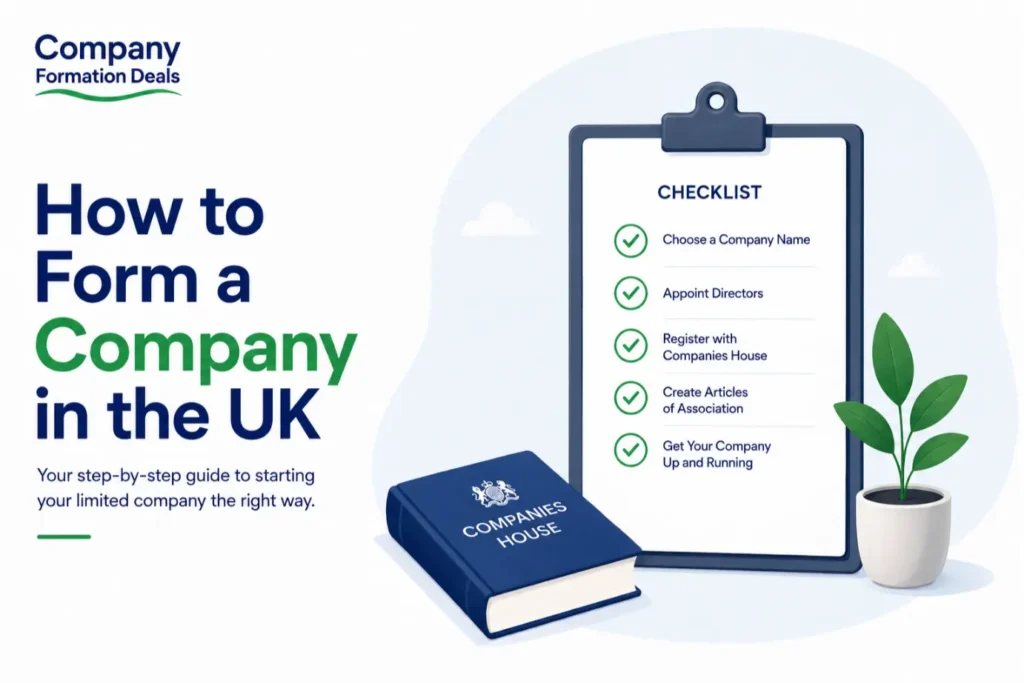 Introduction If you’re planning to start a business in the UK, understanding how to register a limited company correctly is one of the most important first decisions you’ll make. While… Read more: How to Register a Limited Company in the UK: 9 Easy Steps (2026)